

Our Verdict
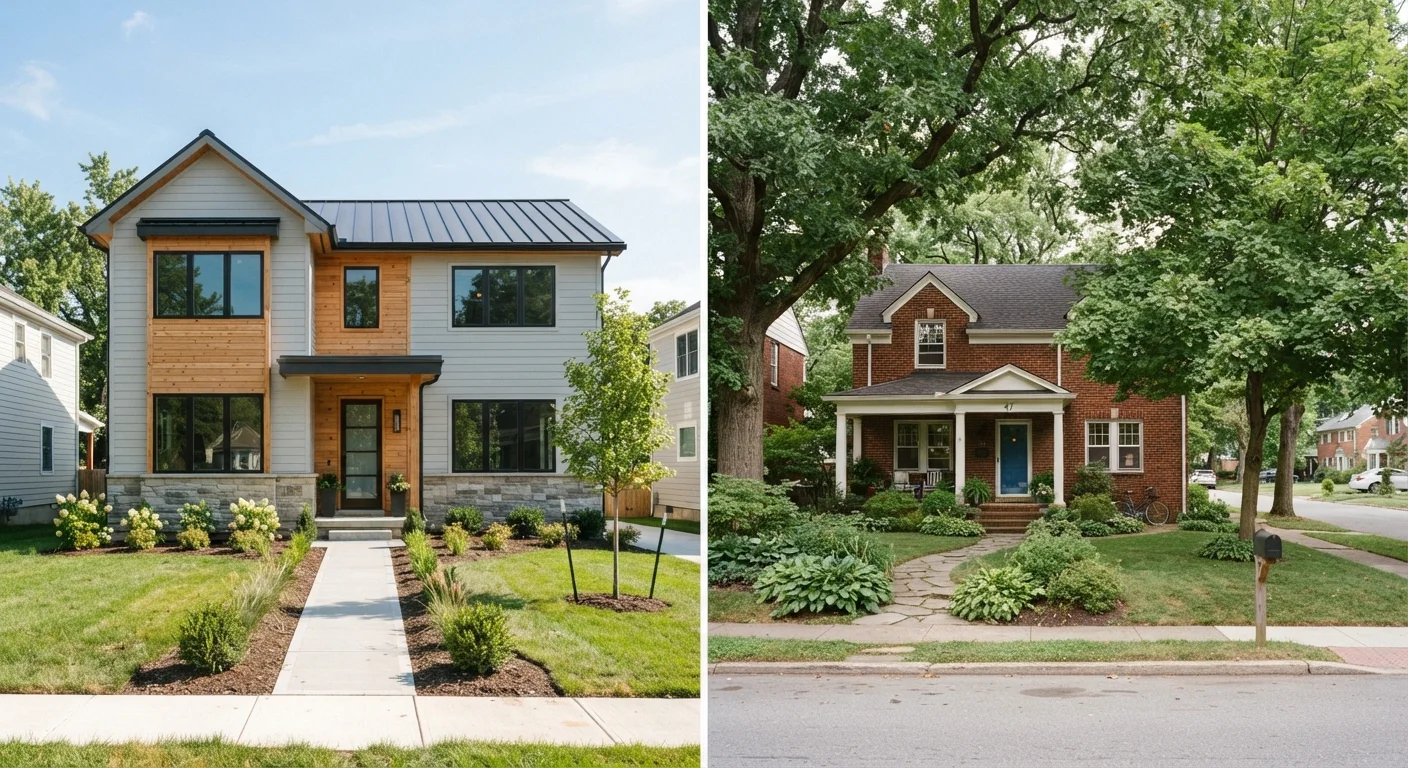
Neither new construction nor existing homes are universally the better choice - both carry legitimate advantages and real trade-offs. New builds suit buyers who want turnkey convenience, modern energy efficiency, and predictable short-term maintenance. Existing homes tend to work better for buyers who value location flexibility, negotiating leverage, and character that takes decades to develop.
New construction is best for buyers with flexible timelines and strong priorities around warranty coverage and customization; existing homes suit those who need to move quickly or prioritize an established neighborhood.
The Core Trade-Off at a Glance
When buyers compare new construction to existing homes, the conversation usually starts with price - but price is rarely the whole story. New homes command a premium in most markets, and yet that premium sometimes buys real, tangible value: a structural warranty, energy-efficient systems, and the peace of mind that comes with no previous owner's deferred maintenance lurking behind the walls.
Existing homes, on the other hand, offer something new builds often can't - established neighborhoods with mature trees, walkable streets, and a track record you can actually research. They also tend to give buyers more negotiating leverage, especially in slower markets.
The honest answer is that neither option dominates. What matters most is how each aligns with your specific timeline, budget, and what you plan to do with the home. If you're still weighing whether to buy at all, Renting vs. Buying: Weighing the Real Trade-Offs covers that foundational question in detail.
Advantages and Disadvantages: New Construction
New construction homes are appealing for good reason, but they also come with strings attached that buyers don't always anticipate.
Builder warranty covers major structural defects
Most new homes come with a one-year workmanship warranty, two-year systems coverage, and a 10-year structural warranty. This reduces short-term financial risk significantly compared to buying a home with unknown history.
Modern energy efficiency reduces utility costs
New builds must meet current building codes for insulation, windows, and HVAC efficiency. Buyers often see meaningfully lower utility bills compared to older homes with aging systems or inadequate insulation.
No deferred maintenance inherited from prior owners
Everything is new - roof, systems, appliances - which means buyers can budget more predictably in the early years without surprise repair bills from wear and tear accumulated under previous ownership.
Opportunity to customize finishes and layout
Depending on the build stage when you contract, you may be able to select flooring, cabinetry, countertops, and structural options like room configurations - creating a home that fits your preferences from day one.
On the downside, the builder relationship isn't always as buyer-friendly as the sales office might suggest.
Premium pricing with limited negotiating room
New construction typically carries a higher price per square foot than comparable existing homes. Builders rarely reduce list prices, making it difficult to negotiate on the same terms buyers expect in a resale transaction.
Long timelines create uncertainty
Custom builds can take a year or more, during which construction delays, material costs, and personal circumstances can all change. Buyers locked into a contract have limited recourse if timelines slip.
Locations often lack established neighborhood character
New developments frequently sit on the suburban fringe where land is available, meaning longer commutes, fewer walkable amenities, and communities without the mature landscaping and social fabric that develop over decades.
Builder incentives may favor the builder's financing
Incentives tied to using the builder's preferred lender can look attractive but may not represent the most competitive loan terms. Buyers should compare offers independently before committing.
Don't Skip the Inspection on New Construction
Many buyers assume a brand-new home doesn't need a third-party inspection. In practice, new builds regularly have punch-list issues - improperly installed insulation, grading problems, or HVAC deficiencies - that a builder's own inspectors may not catch or prioritize. Hiring an independent inspector before closing, and ideally before the drywall goes up if timing allows, gives you documentation and leverage to require corrections before you take ownership.
One often-overlooked consideration: builder contracts are typically written by the builder's attorneys and are less negotiable than a standard residential purchase agreement. Having a real estate attorney review the contract before signing is generally advisable.
How Existing Homes Compare
Existing homes represent the vast majority of what's available on the market at any given time, and many buyers find that the trade-offs favor them - particularly when location or budget flexibility is a priority.
~85%
Share of US home sales that are existing homes
According to the National Association of Realtors, existing home sales consistently account for the large majority of total US residential transactions in any given year.
~$40K-$60K
Typical new-construction price premium over existing
Price gaps between new and existing homes vary widely by market, but analyses by housing economists have generally found new construction commands a meaningful per-square-foot premium in comparable submarkets.
The key risks with existing homes center on condition and hidden costs. Even a well-maintained older home may have aging systems - roof, HVAC, plumbing - that are functional today but approaching the end of their useful lives. A thorough home inspection is essential, and buyers should budget for near-term capital expenditures beyond the down payment. Things First-Time Buyers Wish They'd Investigated Before Closing outlines many of the details buyers miss until it's too late.
Cosmetic updates - flooring, paint, fixtures - are relatively manageable. If you're thinking through finish choices for an existing home, Flooring Options Compared: Hardwood, Laminate, LVP, and Tile breaks down the real durability and cost differences worth understanding before you commit.
Negotiating Power: Where Each Side Has the Edge
One of the most practical differences between the two paths is how much room you have to negotiate. With existing homes, negotiating is standard practice - price, closing costs, repairs, and concessions are all on the table depending on market conditions.
With new construction, builders rarely discount the base price, because doing so would affect appraisals for neighboring lots they haven't sold yet. However, they may offer meaningful incentives: financing rate buy-downs through their preferred lender, upgraded finishes, or help covering closing costs. These incentives can be valuable, but it's worth having an independent lender quote for comparison before committing to a builder's financing package.
Buyers of existing homes in competitive markets may find themselves with little leverage, while buyers of new construction in slower or oversupplied markets may find builders more willing to negotiate on upgrades or incentives. Understanding your local market conditions - not just national headlines - matters more than most buyers realize.
Timeline and Lifestyle Fit
If you need to move within 60 to 90 days, new construction built to order is almost certainly off the table. Custom and semi-custom builds can take 9 to 18 months or longer. Some builders offer inventory homes - units already under construction or move-in ready - which close that gap, but choice is limited.
Existing homes can close in 30 to 45 days under typical conditions, making them far more compatible with lease-end deadlines, job relocations, or school-year timing.
Lifestyle fit matters too. New developments are often located farther from city centers where land is available and cheaper - a trade-off in commute time and access to amenities that some buyers underestimate when standing in a gleaming model home. For ongoing homeownership guidance after you've made your choice, Homeownership Tips covers managing and maintaining your investment over time.
This article provides general educational information about home-buying decisions and does not constitute financial, legal, or real estate advice. Readers should consult qualified professionals - including a licensed real estate agent, attorney, and lender - before making purchasing decisions.
The content on this site is for informational purposes only and is not a substitute for professional advice. Always consult a qualified professional for guidance specific to your situation.