

Our Verdict
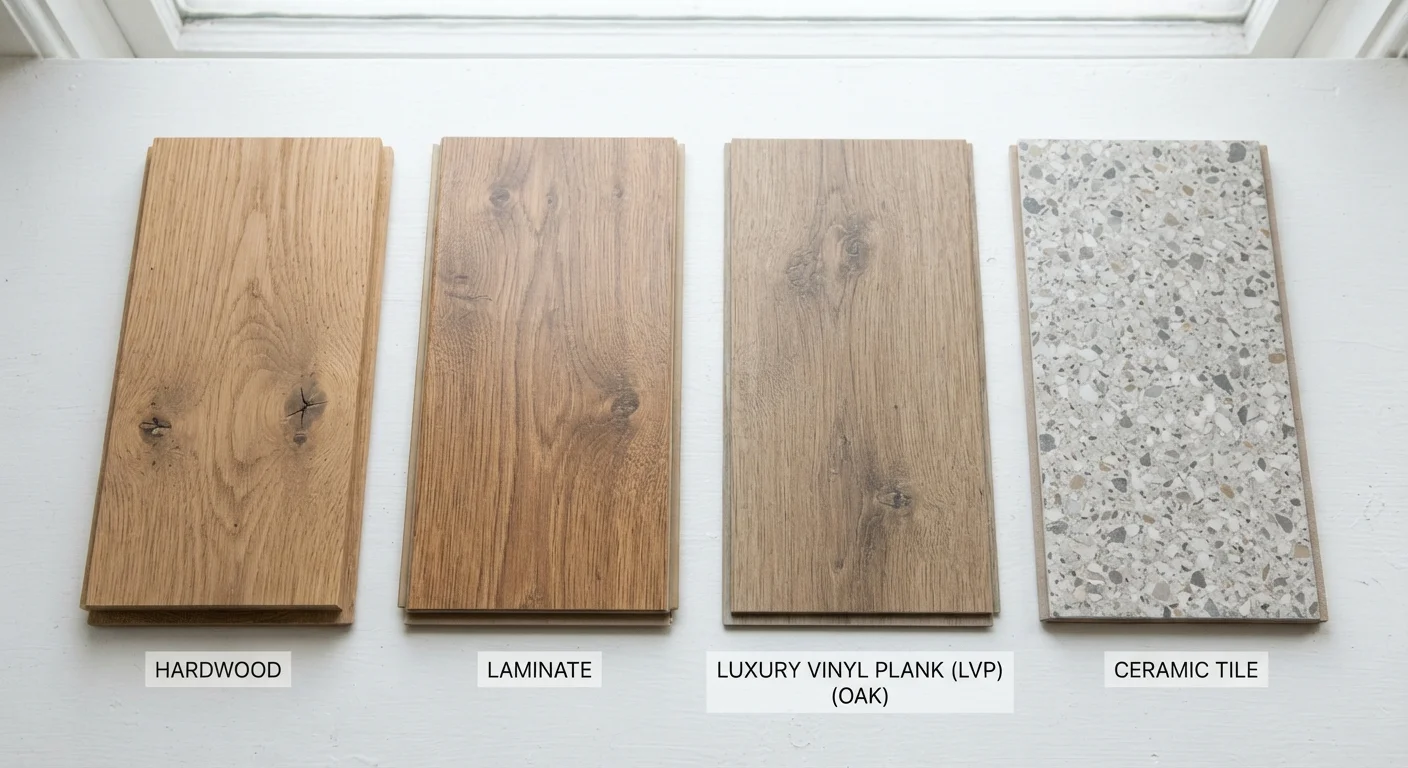
Each flooring material excels in specific conditions. Hardwood suits dry, formal living spaces where longevity and aesthetics are priorities. LVP has become a go-to for its waterproofing and ease of installation across nearly any room. Tile remains the strongest choice for wet areas, while laminate serves budget-conscious projects in low-moisture zones.
| Best for | Recommended |
|---|---|
| Dry living areas where aesthetics and longevity matter most | Hardwood |
| Bathrooms, kitchens, laundry rooms, or homes with pets and kids | Luxury Vinyl Plank (LVP) |
| Wet areas like showers, mudrooms, or exterior-adjacent spaces | Tile |
| Budget-focused renovations in bedrooms or low-traffic dry rooms | Laminate |
Why Flooring Choice Matters More Than It Seems
Flooring is one of the most impactful decisions in any home project - it affects daily comfort, cleaning habits, noise levels, and resale appeal. Yet many homeowners choose based on looks alone, only to discover the material isn't well-suited to the room's actual conditions. Understanding each option's strengths and limits upfront prevents costly do-overs.
This comparison covers the four most common hard flooring types installed in US homes: solid or engineered hardwood, laminate, luxury vinyl plank (LVP), and ceramic or porcelain tile. If you're also weighing whether to keep carpet in some rooms, our article on hard floors vs. carpet explores that trade-off in depth.
| Hardwood | Laminate | LVP | Tile | |
|---|---|---|---|---|
| Moisture Resistance | Low - avoid wet areas | Low - swells at seams | High - fully waterproof | Very high - best for wet rooms |
| Durability / Scratch Resistance | Moderate - dents and scratches | Moderate - wear layer varies | Good - resists everyday scratches | Excellent - nearly scratch-proof |
| Refinishable | Yes - multiple times | No | No | Grout can be resealed/recolored |
| DIY-Friendliness | Moderate to difficult | Easy - click-lock float | Easy - click-lock float | Difficult - requires substrate prep |
| Comfort Underfoot | Warm, natural feel | Slightly hollow feel | Softer than tile | Hard and cold |
| Typical Lifespan | 50+ years with refinishing | 15-25 years | 20-30 years | 30-50+ years |
| Maintenance Level | Moderate - refinish periodically | Low - but no repair option | Low - easy to clean | Moderate - grout needs sealing |
Hardwood: Timeless, but Demanding
Solid hardwood - typically oak, maple, or hickory - is prized for its natural grain, warmth underfoot, and the ability to be sanded and refinished multiple times over decades. Engineered hardwood uses a real wood veneer over a plywood core, making it more dimensionally stable in fluctuating humidity.
The key limitations: hardwood scratches, dents, and swells with moisture. It should not be installed in bathrooms, below-grade basements, or directly over radiant heat systems without manufacturer guidance. Maintenance involves occasional refinishing (every 7-10 years depending on wear) and prompt cleanup of spills. Installation typically requires a professional, particularly for nail-down or glue-down methods.
Engineered Hardwood for More Flexibility
If you love the look of real wood but your home has mild humidity variation or you want to install over a concrete subfloor, engineered hardwood is worth exploring. Its cross-ply plywood core resists expansion and contraction better than solid wood. Just confirm the veneer is thick enough to allow at least one or two refinishing passes - typically 2mm or more.
Laminate and LVP: The Modern Alternatives
Laminate flooring uses a photographic layer under a clear wear layer to simulate wood or stone. It's generally more affordable than hardwood and installs quickly via floating click-lock planks. However, laminate cannot be refinished, and its fiberboard core swells when water penetrates the seams - making it a poor choice for kitchens, baths, or any space prone to spills or humidity.
Luxury vinyl plank (LVP) looks similar to laminate but is constructed from PVC, making it 100% waterproof throughout - not just the surface. It's softer underfoot than tile, resists scratches reasonably well, and is among the most DIY-accessible options available. Many homeowners installing it themselves in new construction or renovation projects find the floating click-lock system forgiving. If you're considering a new construction project and thinking through flooring choices as part of a larger decision, our piece on new construction vs. existing homes may provide helpful context.
~30%
Share of US flooring market held by resilient/LVP
Resilient flooring, including LVP, has grown to represent a significant and increasing share of the US residential flooring market, according to industry trade data.
50+ years
Potential lifespan of solid hardwood with refinishing
Properly maintained and periodically refinished solid hardwood floors can outlast multiple renovations, making long-term cost-per-year competitive with lower-upfront options.
Tile: The Hardest Worker in Wet Rooms
Ceramic and porcelain tile are the most moisture-proof and durable flooring options available for residential use. Porcelain, in particular, is denser and harder than ceramic - suitable for high-traffic areas and outdoor-adjacent spaces. Tile won't scratch, stain, or warp, and it's compatible with in-floor radiant heating systems.
The trade-offs are real: tile is cold and hard underfoot, grout lines require periodic sealing and can discolor over time, and installation is labor-intensive. Proper substrate preparation is critical - tile laid over a weak or uneven subfloor will crack. For a complete walkthrough of what goes into a successful tile job, see our guide on tile installation from substrate to grout line.
Never Skip Subfloor Preparation for Tile
Tile installation requires a rigid, level, and structurally sound subfloor - typically cement board or an uncoupling membrane over plywood. Installing directly over a bouncy or uneven subfloor is one of the most common causes of cracked tiles and failed grout. For permitted structural or subfloor work, always consult a qualified contractor and verify local code requirements before proceeding.
Choosing Based on Room Conditions and Lifestyle
The most practical framework: match the flooring to the room's moisture exposure, foot traffic, and your tolerance for maintenance. Wet rooms (bathrooms, laundry areas, mudrooms) call for tile or LVP. Dry, low-traffic bedrooms can accommodate laminate or hardwood. Active households with pets or young children generally do better with LVP's scratch and water resistance over hardwood's refinishable-but-delicate surface.
Budget plays a role, but factor in full lifecycle costs - laminate may seem cost-effective upfront, but replacement after water damage can negate the savings. Hardwood's refinishability means it can last 50+ years with proper care. Renters considering upgrades should also factor in whether flooring changes align with their lease terms. Our article on renting vs. buying touches on how long-term housing plans should inform improvement decisions.
The content on this site is for informational purposes only and is not a substitute for professional advice. Always consult a qualified professional for guidance specific to your situation.