

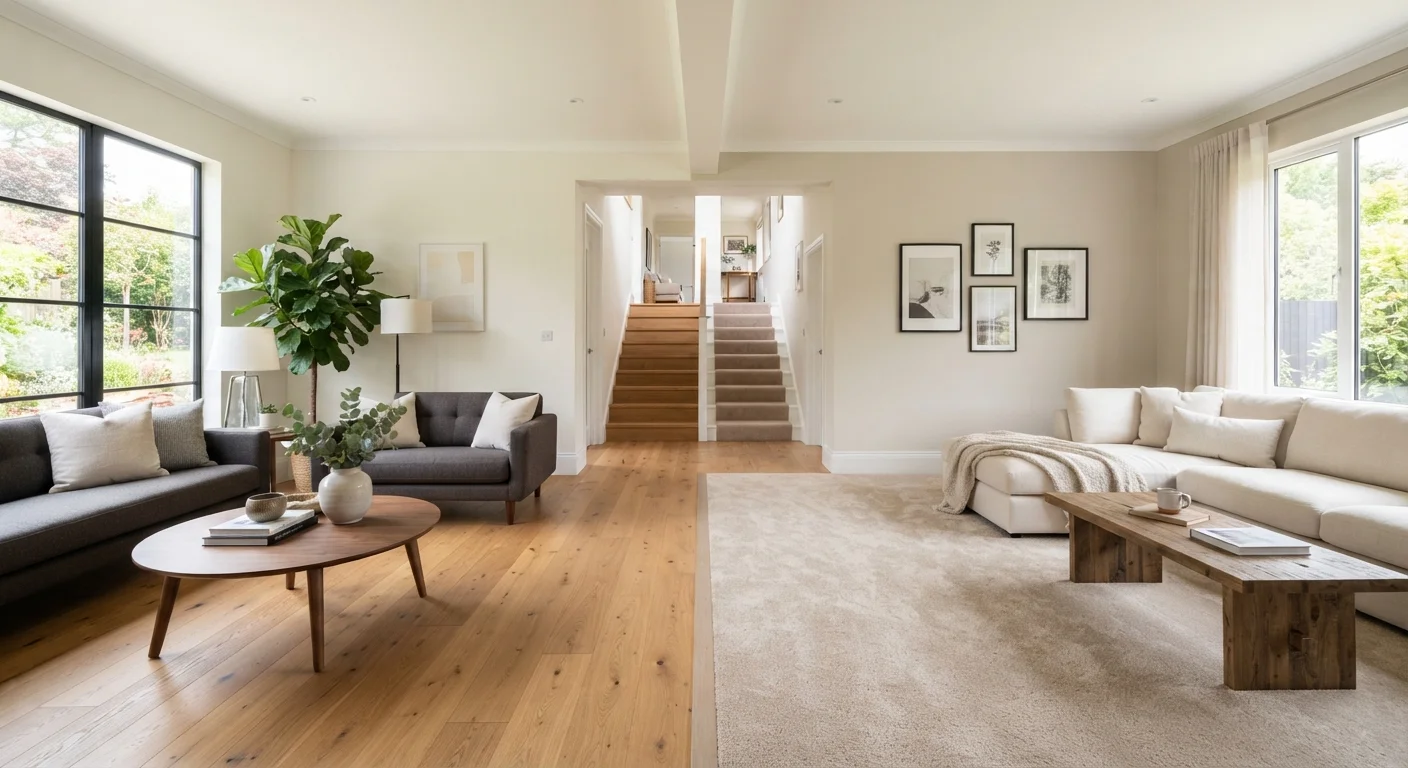
Option A
Hard Floors
The durable, easy-clean workhorse of everyday living.
Best for: Households that prioritize easy maintenance, allergy management, or high-traffic durability.
Option B
Carpet
The comfort-first choice for warmth, quiet, and cushioning underfoot.
Best for: Bedrooms, family rooms, and homes where warmth, softness, and sound dampening matter most.
Day-to-Day Cleaning: What Each Floor Actually Demands
The cleaning gap between hard floors and carpet shows up most clearly in daily life. Hard floors - whether hardwood, laminate, luxury vinyl plank, or tile - can be swept, vacuumed, or damp-mopped in minutes. Spills are contained on the surface, not absorbed into fibers, which dramatically lowers the risk of staining or odor. For a detailed look at how these surface types differ in durability and moisture resistance, see the flooring options comparison guide.
Carpet, on the other hand, holds onto dirt, dust, crumbs, and liquids deep within its pile. Vacuuming regularly - ideally two to three times per week in busy areas - is essential to prevent buildup. Periodic professional deep cleaning (typically once a year in average households) helps maintain appearance and hygiene. Spills that aren't addressed quickly can leave permanent stains or create conditions for mold growth beneath the backing.
That said, hard floors aren't maintenance-free. Hardwood can scratch from grit dragged across it, and grout lines on tile collect grime over time. Consistent sweeping and using protective pads under furniture legs are non-negotiable habits.
| Criterion | Hard Floors | Carpet |
|---|---|---|
| Ease of daily cleaning | High - sweep or mop quickly | Moderate - requires regular vacuuming |
| Spill resistance | Strong - surface-level containment | Low - absorbs liquids into fibers |
| Allergen management | Better - fewer hiding spots for dust and dander | Harder - fibers trap allergens |
| Comfort underfoot | Firm and cool | Soft, warm, cushioned |
| Sound absorption | Low - amplifies noise | High - reduces echo and footfall |
| Typical lifespan | 15-50+ years | 8-15 years |
| Upfront installation cost | Generally higher per sq ft | Generally lower per sq ft |
| Pet suitability | Better overall | Challenging - retains odor and hair |
Comfort, Noise, and How Each Floor Feels to Live With
Underfoot feel is one of the most underrated factors in flooring decisions. Carpet wins clearly on softness and warmth - it's the obvious choice for bedrooms and rooms where bare feet meet the floor frequently. It also acts as a natural sound buffer, absorbing footfall noise and reducing echo in rooms with hard furniture and high ceilings.
Hard floors, by contrast, amplify sound. Footsteps, dropped objects, and conversation carry noticeably further on tile or hardwood, which matters in multi-story homes or open-plan layouts. Area rugs can mitigate this, and many homeowners use them strategically to add warmth in living areas while keeping the practical benefits of a cleanable surface underneath.
Temperature is also worth noting: carpet retains warmth and can make a room feel cozier in winter, while hard floors tend to feel cold underfoot unless the home has radiant heat. If you live in a colder climate, this is a real comfort consideration - especially for bedrooms or rooms where children play on the floor.
8-15 yrs
Typical carpet replacement cycle
Industry estimates suggest most residential carpet needs full replacement within 8-15 years, depending on traffic and maintenance.
50+ yrs
Potential lifespan of hardwood floors
Solid hardwood floors that are properly maintained and refinished periodically can remain serviceable for several decades.
2-3x/week
Recommended vacuuming frequency for carpet
Flooring care guidelines generally suggest vacuuming high-traffic carpeted areas two to three times per week to prevent embedded soil.
Longevity, Replacement Cycles, and Long-Term Costs
Hard floors generally outlast carpet by a significant margin. Properly maintained hardwood can last 50 years or more; quality tile and stone are similarly durable. Luxury vinyl plank and laminate options typically last 15-25 years depending on traffic and care. Carpet, even with diligent maintenance, has a shorter service life - commonly 8 to 15 years before wear, matting, and embedded odors make replacement the practical choice.
This replacement cycle adds up over time. While carpet's installation cost is usually lower per square foot, the need to replace it more frequently means the long-term cost comparison shifts. Homeowners should factor in not just installation but the cumulative cost across years of ownership. For context on how deferred maintenance on any home feature can escalate costs, the deferred maintenance article offers useful perspective.
In homes with pets, carpet replacement cycles often shorten further due to odor absorption and claw wear. If your household includes animals, cleaning strategies for pet-friendly homes can help you extend the life of whatever flooring you choose.
Mixed Flooring Is a Valid Strategy
Many homeowners use hard floors in high-traffic areas like kitchens, entryways, and bathrooms, while keeping carpet in bedrooms and living rooms. This hybrid approach lets you match each floor type to the demands of each space rather than making a single house-wide commitment. Area rugs over hard floors can further soften the tradeoffs in shared spaces.
The content on this site is for informational purposes only and is not a substitute for professional advice. Always consult a qualified professional for guidance specific to your situation.