

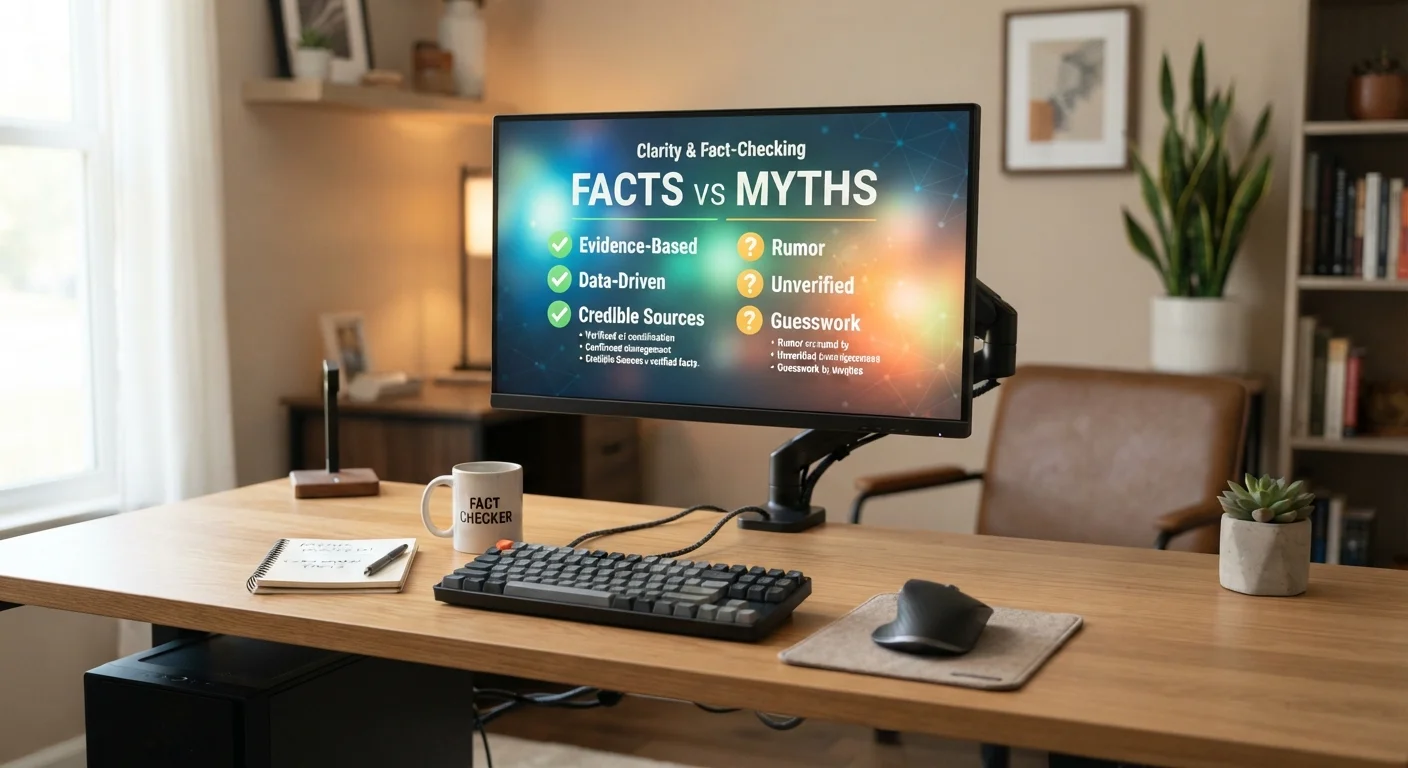
Why These Myths Stick Around
Computer myths tend to persist for a predictable reason: many of them were true at some point. Advice that made sense for hardware from fifteen or twenty years ago gets passed down without the expiration date attached. The result is a set of habits and beliefs that no longer match how modern computers actually work - and that occasionally lead users to make decisions that don't help, or quietly make things worse.
What follows are six of the most commonly repeated misconceptions, corrected with an explanation of what's actually going on under the hood. If you're new to computers and want foundational context first, our plain-language guide to personal computers is a good starting point.
Myth
Macs don't get viruses, so you don't need security software on one.
Fact
Macs can and do get malware. Their reputation for security comes from historically lower market share, not immunity.
For years, fewer attackers targeted macOS simply because Windows had a much larger user base - making Windows the more lucrative target. As Macs have grown more popular, so has Mac-specific malware. Security researchers regularly document adware, spyware, and phishing attacks that affect macOS users. Running reputable security software and keeping the operating system updated remains sound practice on any platform. The idea of total Mac immunity is one of the most persistent - and potentially costly - myths in consumer tech.
Myth
Adding more RAM will always make your computer noticeably faster.
Fact
RAM upgrades only improve performance when RAM is the actual bottleneck. If it isn't, adding more makes no difference.
RAM (random access memory) is your computer's short-term workspace - it holds data the processor is actively using. If your system regularly runs out of that workspace, adding more will help significantly. But if you already have sufficient RAM for your typical workload, doubling it will produce no perceptible speed gain. For most everyday tasks like web browsing, email, and document editing, the real bottlenecks are more often an aging processor or a slow traditional hard drive. See our plain-language guide to RAM, storage, and CPU speed to understand how each spec affects your day-to-day experience.
Myth
You should always shut down your computer every night to keep it healthy.
Fact
Modern computers are designed to handle extended uptime. Restarting periodically is useful, but nightly shutdowns are not required.
The belief that computers need nightly shutdowns to stay healthy dates to an era of older hardware and less stable operating systems. Today's machines handle sleep and hibernate modes efficiently, and many system updates and maintenance tasks actually run best when a machine is left on. That said, restarting your computer regularly - say, once or twice a week - can help clear temporary files and apply pending updates. The key distinction: restarting when needed is good practice, but forcing a shutdown every single night out of habit provides little real benefit and can interrupt background processes.
Myth
Keeping your laptop plugged in all the time will ruin the battery.
Fact
Modern laptop batteries have built-in charge management that prevents overcharging under normal use.
Older nickel-based batteries from decades past were genuinely harmed by being kept at full charge for extended periods. Lithium-ion batteries - the standard in virtually all current laptops - include charging circuitry that stops drawing power once the battery is full. What does degrade lithium-ion batteries over time is heat and repeated deep discharge cycles. Keeping a laptop on a well-ventilated surface and avoiding consistent drops to near-zero charge matters more than unplugging it when it hits 100%. Some manufacturers offer optional battery management settings that cap charging at 80% for users who keep their laptops plugged in most of the time.
Myth
If your computer is running slowly, a full factory reset is the best fix.
Fact
Factory resets are a last resort, not a first step. Most slowdowns have specific, fixable causes that don't require wiping your data.
A factory reset erases everything and returns the machine to its original state - it's a significant, disruptive action. For the vast majority of performance complaints, targeted fixes work far better: clearing temporary files, uninstalling unused programs, checking for malware, or replacing a traditional spinning hard drive with a solid-state drive (SSD). Our related article on why computers slow down over time breaks down the real causes and practical remedies. Reserve a full reset for situations where software corruption is severe or the machine is being passed on to someone else.
Myth
Closing background apps manually will always speed up your device.
Fact
Manually force-closing apps can sometimes reduce performance by making the system reload them from scratch when needed again.
Operating systems are designed to manage background processes intelligently. When an app is suspended in the background, it uses very little processing power and is ready to open instantly. Force-closing it means the system has to reload it from storage the next time you need it - which can actually use more resources than leaving it suspended. The habit of constantly closing every background app comes largely from early smartphone advice that doesn't translate directly to modern desktop or laptop operating systems. Focus instead on managing what programs launch automatically at startup, which has a more meaningful impact on overall responsiveness.
What Actually Moves the Needle on Performance
Most everyday performance problems come down to a handful of real culprits: insufficient storage space, a slow hard drive, too many startup programs, or accumulated software clutter. Understanding which factor is actually limiting your machine makes it far easier to address - and far less likely you'll chase solutions that don't apply.
~80%
Slowdowns caused by software, not hardware
Technology support analysts broadly estimate that the majority of reported performance issues stem from software bloat, startup programs, or storage problems rather than failing components.
2-3×
Speed improvement from HDD to SSD upgrade
Replacing a traditional spinning hard drive with a solid-state drive is widely cited by technicians as one of the most impactful single upgrades for aging computers.
If you're noticing consistent slowdowns, recognizing the signs that your computer is being pushed past its limits can help you diagnose the actual issue before attempting any fix. And if you've ever wondered how Windows and macOS handle these challenges differently, our side-by-side comparison for everyday users covers exactly that.
Don't Skip Backups Before Troubleshooting
Before attempting any significant fix - including software resets, disk cleanup tools, or operating system updates - back up your important files to an external drive or cloud storage. Even routine maintenance steps can occasionally go wrong, and recovering data after an unplanned wipe is far harder than creating a backup beforehand.
Myths about computers aren't harmless trivia - acting on bad information can lead to real data loss, unnecessary spending, or a machine that gets slower instead of faster. The best defense is understanding what your computer is actually doing, and why.
The content on this site is for informational purposes only and is not a substitute for professional advice. Always consult a qualified professional for guidance specific to your situation.