

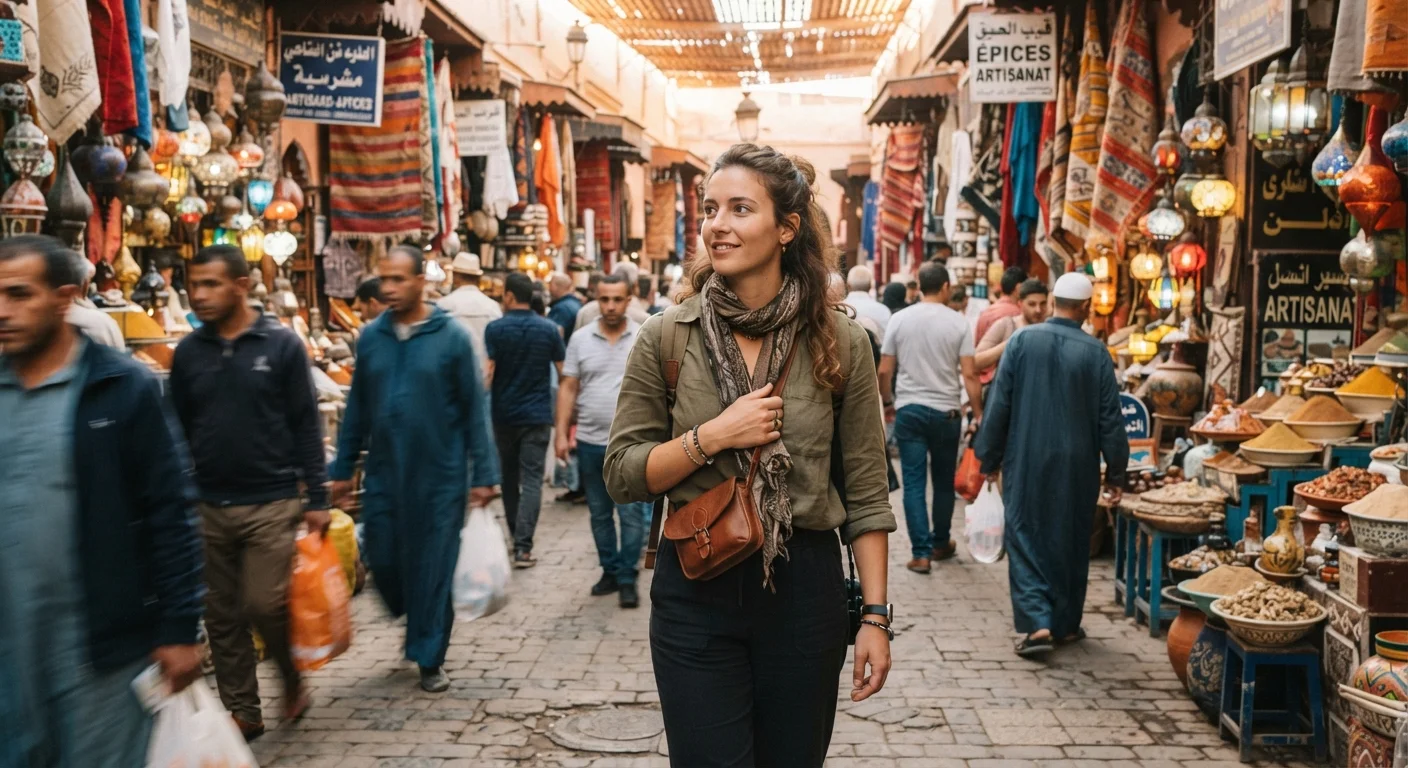
Why Situational Awareness Is Your Most Valuable Travel Tool
Most travel incidents don't happen because a destination is inherently dangerous - they happen because a traveler was distracted, disoriented, or visibly unprepared. Situational awareness simply means staying tuned in to your surroundings, noticing what's normal, and catching subtle signals that something feels off.
In practice, this looks like: knowing which direction your hotel is before you leave it, keeping your phone out of sight in crowded areas, and glancing around when you stop to look at a map. It's not paranoia - it's the same attentiveness you'd bring to an unfamiliar neighborhood at home.
Before you travel, spend time with a pre-departure checklist so logistics are handled before you land, leaving your mental bandwidth free for staying present once you arrive.
The Scams Tourists Encounter Most Often - and How to Recognize Them
Scams targeting travelers are common because tourists are predictable: unfamiliar with local prices, eager to be helpful, and sometimes emotionally off-guard. The good news is that the most prevalent scams follow recognizable patterns.
- The friendship bracelet or gift: A stranger ties something on your wrist or hands you a trinket, then aggressively demands payment.
- The broken taxi meter: A driver claims the meter is broken and quotes an inflated flat rate after you've arrived.
- The distraction technique: One person engages you while another picks your pocket or bag.
- The currency confusion play: Someone offers to help you exchange money informally, giving you counterfeit or devalued notes.
- The official-looking "fine": A person posing as police or a transit officer demands payment for a supposed violation.
The universal defense: slow down, don't accept unsolicited items or help, and confirm any official interactions by asking to see ID or visiting a legitimate office. Also check common travel myths debunked - some scam warnings are exaggerated while real risks get underestimated.
Smart Daily Habits That Reduce Your Risk Profile
Consistent small habits create a protective layer that makes you a significantly less attractive target and keeps you better prepared if something does go wrong.
Here's what experienced travelers consistently recommend:
- Split your cash and cards - carry only what you need for the day and store the rest securely at your accommodation.
- Use a crossbody bag with a zipper or a money belt for valuables in crowded areas.
- Photograph your passport, travel insurance, and important documents and store them in a secure cloud location.
- Share your itinerary with someone at home before you leave.
- Enroll in the U.S. State Department's STEP program, which allows the nearest U.S. embassy to reach you in an emergency.
Digital security matters too - public Wi-Fi in airports and cafés can expose your accounts. See how to keep your smartphone secure for practical steps before you travel.
For a complete pre-trip preparation plan, including documents and health considerations, international travel prep guidance covers the essentials. Also consider cultural etiquette differences - blending in respectfully reduces the signals that mark you as an easy target.
This article provides general travel safety information for educational purposes. For destination-specific entry requirements, health advisories, and security conditions, always consult official sources such as the U.S. State Department's travel advisory page and the CDC before traveling.
The content on this site is for informational purposes only and is not a substitute for professional advice. Always consult a qualified professional for guidance specific to your situation.