

The Gap Between Expectation and Reality
Yellowstone is America's oldest national park and one of its most hyped. Social media feeds it a mythic quality - every post seems to show an empty boardwalk at Old Faithful, a lone bison silhouetted at sunrise, a geyser erupting on cue. The reality is more complicated, and more wonderful, if you know what you're actually stepping into.
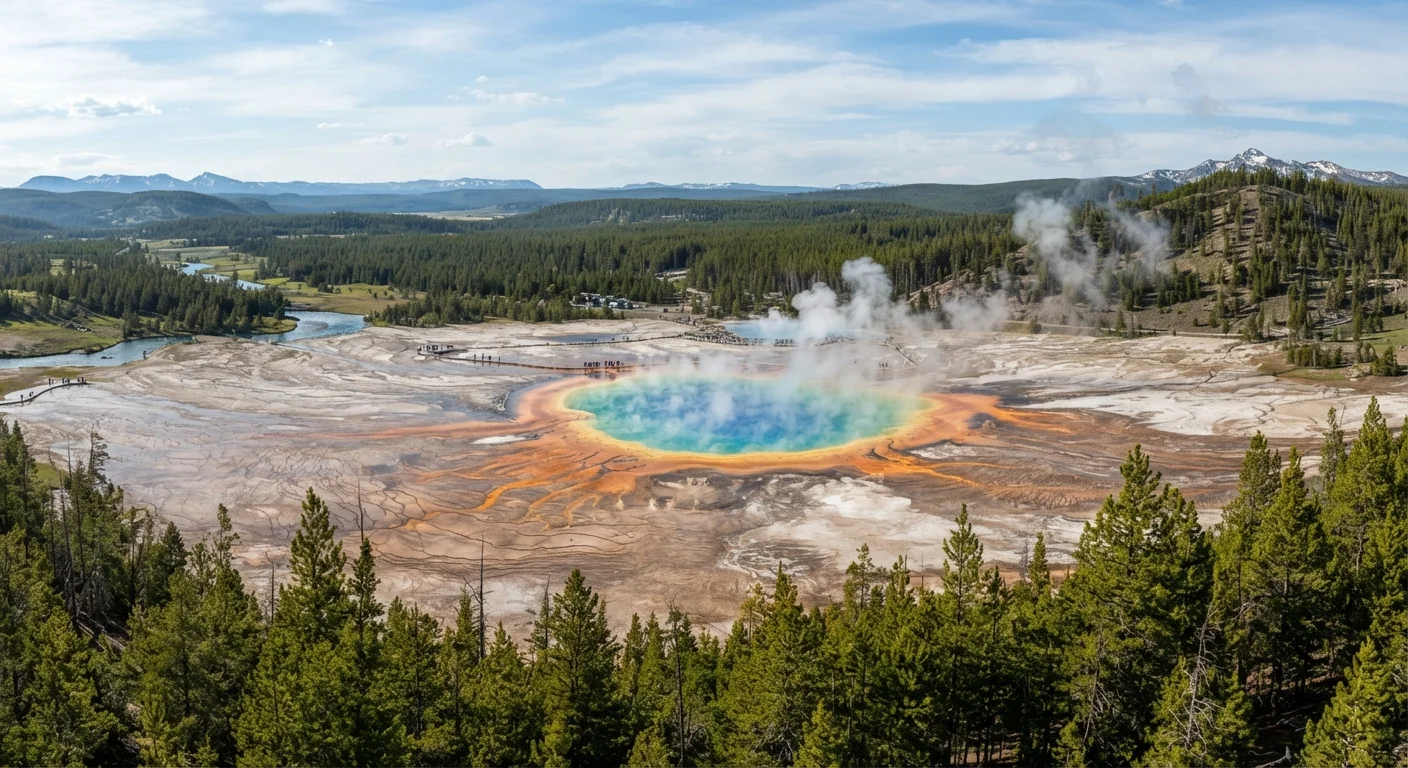
The park spans parts of Wyoming, Montana, and Idaho. It contains roughly half the world's active geothermal features, thousands of bison, and terrain that shifts dramatically from volcanic plateaus to river canyons. It is also one of the most visited national parks in the United States, drawing millions of visitors each year. First-timers who arrive without a realistic picture of its scale and quirks often leave frustrated - not because the park failed them, but because their plan did.
For a broader look at what crowds and logistics actually look like at America's most popular parks, see our guide to peak-season national park visits.
Treating Yellowstone like a single attraction to tick off in a day or two.
Why it happens: Visitors underestimate the park's scale. A quick look at a map doesn't convey that driving between major sites can take 45 minutes to over an hour each way.
Arriving in peak July without lodging or campsite reservations.
Why it happens: Many travellers assume they can figure out accommodation on arrival or find last-minute openings. Yellowstone lodges and campgrounds fill months in advance during summer.
Expecting guaranteed wildlife sightings on a fixed schedule.
Why it happens: Social media presents highlight-reel moments as routine. Visitors arrive expecting to see wolves or bears within a few hours of entering the park.
Ignoring the safety rules around thermal features and wildlife.
Why it happens: The features look approachable, and the rules can feel excessive until you understand the stakes. Hydrothermal waters can reach near boiling, and bison are faster and more unpredictable than they appear.
Underestimating altitude, weather swings, and physical demands.
Why it happens: Much of Yellowstone sits above 7,000 feet in elevation. Visitors from low-altitude areas are often caught off guard by thin air, afternoon thunderstorms, and rapid temperature drops.
Planning Smarter Before You Go
Most Yellowstone disappointments are preventable at the planning stage. The park's road system forms a figure-eight loop roughly 142 miles long - but driving that loop, stopping at viewpoints, and accounting for bison jams (yes, bison routinely stop traffic) makes it a multi-day endeavor at minimum.
2.2M
Acres in Yellowstone National Park
The National Park Service notes Yellowstone is larger than Rhode Island and Delaware combined, making selective itinerary planning essential.
500+
Active geysers in the park
Yellowstone contains roughly half of the world's geothermal features, according to the National Park Service, concentrated across multiple distinct geyser basins.
Seasoned visitors pick one or two regions - the Geyser Basins of the Upper Loop, the Grand Canyon of the Yellowstone, or the Lamar Valley - and explore them deeply rather than racing between all five entrances. This approach reduces windshield time and dramatically increases the quality of what you actually experience.
Wildlife viewing is another area where realistic expectations pay dividends. Animals move on their own schedule, not yours. The Lamar Valley is widely regarded as one of North America's premier wildlife corridors, but there's no performance guarantee. Early mornings, overcast days, and patience are your real tools. Our responsible wildlife viewing guide covers the ethical and safety dimensions that every visitor should understand before approaching any animal in the wild.
Itinerary structure matters too. Overpacking your days is the fastest way to turn a dream trip into an exhausting blur. For practical planning principles, see how to build an itinerary that actually holds up - and consider building unscheduled buffer time into your days, which consistently produces better trips in parks with unpredictable conditions.
Never Leave Boardwalks Near Thermal Features
Hydrothermal ground in Yellowstone can be thin and unstable even where it looks solid. Water temperatures in hot springs and geysers can approach or exceed boiling. Venturing off designated boardwalks and trails near thermal areas has caused serious injuries and fatalities. Always keep children within arm's reach and follow all posted signage without exception.
The content on this site is for informational purposes only and is not a substitute for professional advice. Always consult a qualified professional for guidance specific to your situation.