

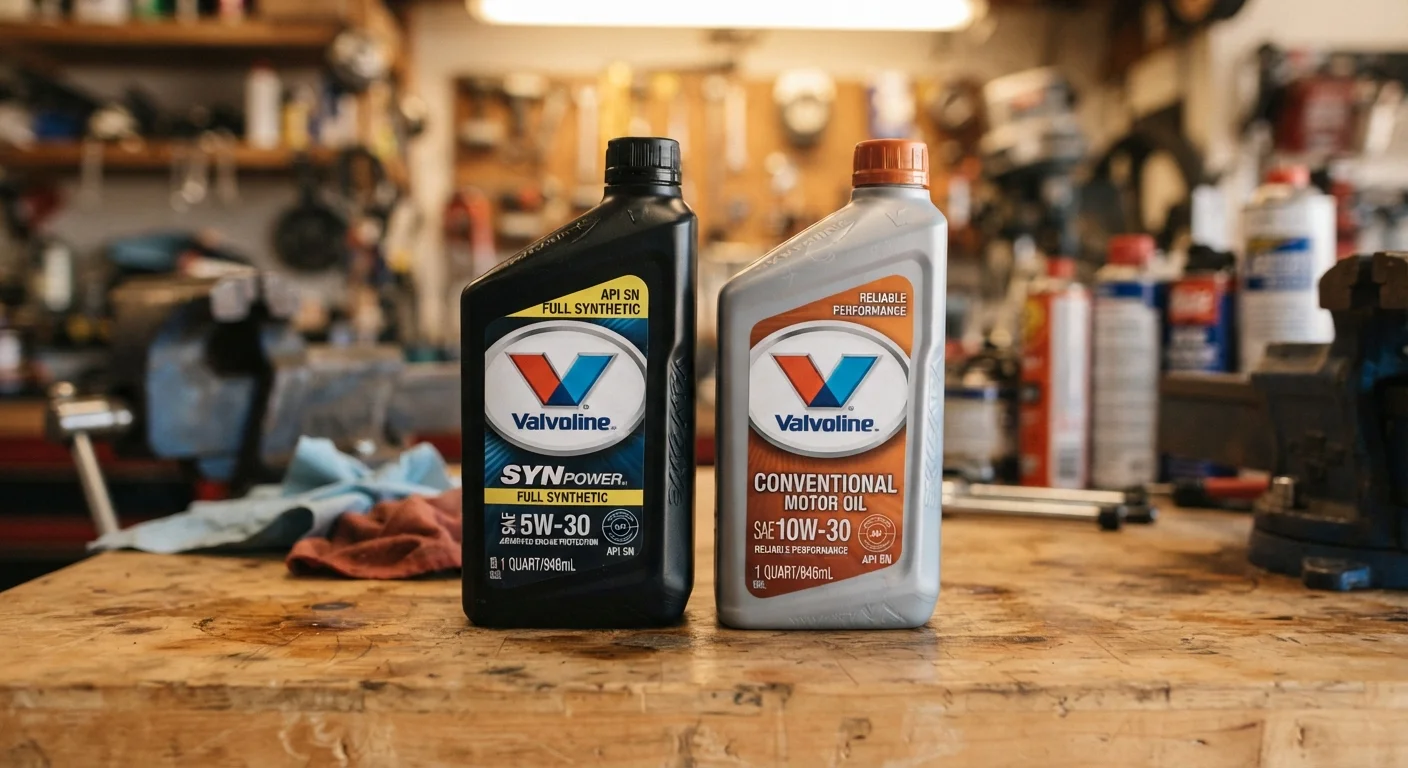
Option A
Synthetic Motor Oil
The engineered, high-performance option.
Best for: Drivers who want maximum engine protection, longer intervals between oil changes, or operate in extreme temperatures.
Option B
Conventional Motor Oil
The traditional, widely available choice.
Best for: Drivers with older, simpler engines who change their oil on a regular schedule and operate in moderate conditions.
What Makes These Two Oils Different
Both synthetic and conventional motor oil serve the same fundamental purpose: lubricating engine components to reduce friction, carry away heat, and suspend contaminants until the next oil change. The key difference lies in their origins and molecular structure.
Conventional motor oil is refined from crude petroleum. During refining, impurities are removed, but the resulting oil still contains a natural mix of hydrocarbon molecules in varying shapes and sizes. This irregularity means the oil can thin out faster at high temperatures and thicken more in the cold.
Synthetic motor oil is chemically engineered - either built from scratch or heavily processed - so that its molecules are more uniform in size and shape. This consistency gives synthetic oil more predictable performance across a wider range of temperatures and operating conditions. It also resists breakdown better over time, which is why it can go longer between changes.
There are also synthetic blends, which mix both types, offering a middle ground in terms of performance and cost. These are worth considering if your budget or vehicle falls somewhere between the two ends of the spectrum.
For a deeper look at how oil grades and viscosity ratings work alongside oil type, see our guide to engine oil viscosity grades.
| Criterion | Synthetic Motor Oil | Conventional Motor Oil |
|---|---|---|
| Origin | Chemically engineered or heavily processed | Refined from crude petroleum |
| Molecular consistency | Highly uniform | Naturally variable |
| Typical change interval | 7,500-10,000+ miles (varies by vehicle) | 3,000-5,000 miles |
| Cold-weather performance | Flows more readily at low temps | Thickens more in the cold |
| Heat resistance | Better stability at high temps | Breaks down faster under heat |
| Cost per quart | Generally higher | Generally lower |
| Required by some engines | Yes - many modern/turbocharged engines | Not typically required by newer engines |
Real-World Performance: Where the Differences Show Up
For the majority of everyday drivers, the performance gap between synthetic and conventional oil is most visible in three situations: extreme temperatures, demanding driving patterns, and extended change intervals.
Cold starts are particularly telling. On a freezing morning, conventional oil thickens more, meaning the engine runs momentarily without full lubrication while the oil warms up. Synthetic oil flows more readily from the moment you turn the key, reducing that brief period of wear. Over thousands of cold starts across a vehicle's lifetime, this can matter.
High heat and stop-and-go driving push any oil harder. Short trips, heavy traffic, and towing cause oil to break down faster. Synthetic oil's more stable molecular structure allows it to maintain viscosity (thickness) better under these stresses.
Change intervals reflect these differences directly. Conventional oil is typically recommended for changes every 3,000 to 5,000 miles. Synthetic oil, depending on the product and vehicle, may support intervals of 7,500 to 10,000 miles or more - though you should always follow your manufacturer's schedule, not just the oil's marketing claims.
~2x
Longer change intervals for synthetic vs. conventional
Many vehicle manufacturers and industry guidelines suggest synthetic oil can support roughly twice the mileage between changes compared to conventional, though intervals vary by vehicle and use case.
~70%
Engine wear occurring during cold starts
Industry estimates have long suggested a significant portion of engine wear happens in the first moments after startup, when oil has yet to fully circulate - a scenario where synthetic's faster flow rate offers an advantage.
It's worth noting that even the best oil cannot compensate for skipped changes. As our article on maintenance habits that shorten engine life explains, deferred oil changes are among the most damaging things you can do to an engine, regardless of oil type.
Cost and Practicality: The Full Picture
Price is often the first thing drivers notice. Conventional oil typically costs less per quart than synthetic, making each individual oil change less expensive at the service counter. However, the math gets more nuanced when you factor in change frequency.
If synthetic oil allows you to go twice as many miles between changes, the total annual cost may be comparable - or the difference may be smaller than it appears. That said, actual savings depend on how many miles you drive per year, your local labor rates, and whether you perform oil changes yourself.
One practical consideration: once you switch to synthetic, you don't have to stay on it indefinitely. Modern synthetic and conventional oils are generally compatible and can be mixed in a pinch, though it's not ideal as a long-term practice. The old notion that switching back to conventional after using synthetic would cause leaks has been largely debunked for modern engines.
Always Check Your Owner's Manual First
Some modern engines - particularly turbocharged, direct-injection, and high-performance models - are specifically engineered to require synthetic oil. Using conventional oil in these engines can void the warranty or lead to accelerated wear. Your owner's manual will specify the required oil type and grade. When in doubt, confirm with a qualified mechanic before making a switch.
If you're weighing the broader cost of vehicle ownership, including decisions like leasing vs. buying a car, ongoing maintenance costs - including oil type - are worth factoring into your total picture.
The content on this site is for informational purposes only and is not a substitute for professional advice. Always consult a qualified professional for guidance specific to your situation.