

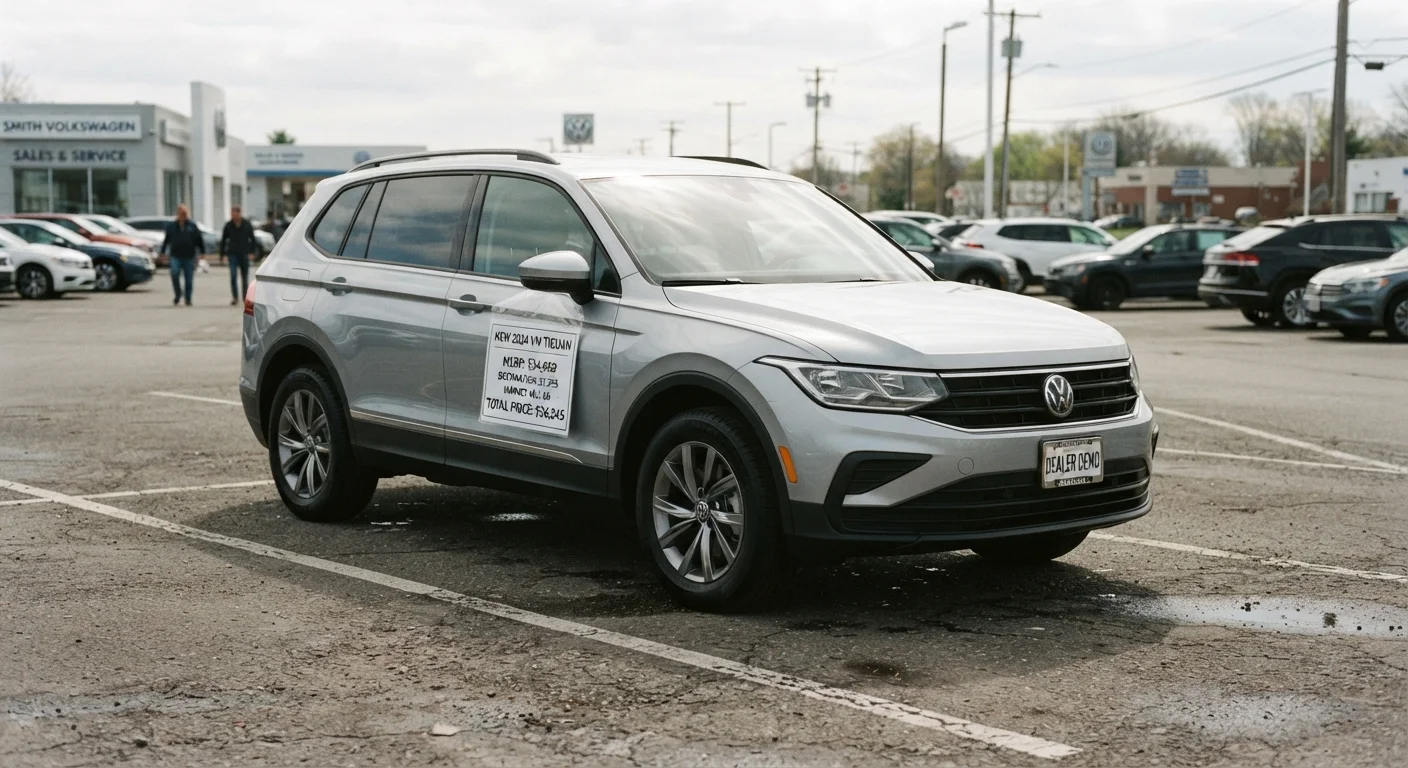
Why Depreciation Hits Hardest in the Early Years
The moment a new car is driven off a dealership lot, its resale value drops - not because anything is wrong with it, but because it is now a used vehicle. This initial drop can represent several thousand dollars in lost value before the car has traveled a single mile on a public road.
The depreciation curve is steepest in years one through three. During this window, a vehicle is losing value at its fastest rate. After that, the curve begins to flatten - the car still loses value, but more gradually. By year five, many vehicles are worth roughly 40-50 cents on the original dollar, depending on the segment.
Several forces drive this early acceleration:
- Market perception: Buyers view any used vehicle differently from a new one, even if the car is nearly identical in condition.
- New model competition: Each year brings updated versions of most models, making prior-year vehicles comparatively less desirable.
- Warranty coverage: Factory warranties cover the early years; as coverage expires, buyers factor in potential repair costs and pay less.
~20%
Average first-year value loss for new vehicles
Industry valuation data consistently shows new cars lose roughly 15-25% of their value in the first 12 months of ownership.
~50%
Value retained after five years, on average
Many vehicles are worth approximately half their original purchase price by the end of year five, though this varies widely by make and model.
#1
Depreciation as a share of total ownership cost
For many drivers, depreciation represents the single largest component of total vehicle ownership cost over a five-year period, according to transportation cost analyses.
The Factors That Influence How Fast a Car Loses Value
Depreciation is not uniform across all vehicles. Several variables shape how quickly - or slowly - a specific car loses its market value.
Mileage is among the most direct factors. Higher annual mileage signals greater wear and reduces the remaining useful life buyers are purchasing. Most lenders and valuation tools use a baseline of around 12,000-15,000 miles per year as a reference point.
Condition and vehicle history matter significantly. A car with a documented accident history will typically appraise lower than a comparable model with a clean record, even if the repair was performed correctly. Keeping up with routine maintenance - oil changes, fluid checks, tire rotations - produces a cleaner service record and preserves mechanical condition, both of which support resale value.
Make, model, and segment also play a role. Some vehicle categories, such as pickup trucks and certain SUVs, have historically held value better than others. Fuel economy expectations, brand reputation for reliability, and regional demand all feed into this. These patterns shift over time with consumer preferences and fuel prices, so past trends are not guarantees of future performance.
Color and trim level have a more modest effect, but neutral colors and popular trim configurations tend to attract a broader pool of buyers, which can support resale pricing at the margins.
“Depreciation is the silent cost that most car buyers never see on an invoice - but it often exceeds what they pay in fuel or insurance over the life of the vehicle.”
— Automotive Economists' Consensus View, Widely cited principle in vehicle total cost of ownership analysis
How Depreciation Connects to Real Ownership Costs
Most drivers focus on the obvious costs of ownership - fuel, insurance, monthly loan payments. Depreciation is rarely listed on a bill, so it tends to be overlooked. But when calculated over the life of a vehicle, it is often the single largest ownership expense.
Consider a vehicle purchased for $35,000 that is worth $18,000 five years later. That $17,000 difference represents a real economic cost, even though no single payment was labeled "depreciation." Spread across five years, that is roughly $3,400 per year in lost asset value - comparable to or exceeding annual fuel or insurance costs for many drivers.
This is why the true cost of owning a car extends well beyond the purchase price. Buyers who understand depreciation can make more deliberate choices about how long to keep a vehicle, when to sell or trade, and whether a new or slightly used car makes more financial sense for their situation.
Depreciation also intersects with auto financing. Buyers who make small down payments on new vehicles can quickly find themselves owing more than the car is worth - a position known as being "underwater" on the loan. This situation can complicate selling, refinancing, or recovering costs after an accident. Common ownership mistakes, like skipping gap insurance, can make this scenario even more costly.
Gap Insurance Can Protect Against Depreciation Risk
If you finance a vehicle with a small down payment, gap insurance covers the difference between what you owe on the loan and what the car is worth if it is totaled or stolen. Because new vehicles depreciate quickly, this coverage can be particularly valuable in the first two to three years of ownership. Ask your insurer or lender for details on eligibility and cost.
What Owners Can Realistically Do
While no driver can stop a vehicle from depreciating, there are practical choices that affect how much value is preserved over time.
Keep the vehicle well-maintained. A documented service history reassures future buyers and reflects well on condition. Neglecting maintenance not only accelerates mechanical wear but also reduces the car's appeal and appraised value. Skipping routine maintenance can accelerate both mechanical wear and value loss simultaneously.
Mind your mileage if resale is a priority. If you anticipate selling within a few years, keeping annual mileage closer to the average range preserves more of the car's projected value.
Protect the vehicle's condition. Dents, interior damage, and faded paint all reduce appraised value. Prompt, quality repairs after minor incidents protect condition over time.
Time your sale or trade thoughtfully. Selling a vehicle before major scheduled maintenance comes due - and before warranty coverage expires - can improve the terms you receive. The used-car market also fluctuates; while timing the market precisely is not realistic, understanding general trends in vehicle demand in your region can be informative.
Understanding depreciation does not require advanced financial knowledge. It simply requires recognizing that a vehicle's value is an asset that erodes over time - and factoring that reality into every ownership decision, from purchase to sale.
This article is for general informational purposes only and does not constitute financial or investment advice. Consult a qualified financial professional for guidance specific to your situation.
Frequently Asked Questions
Most new vehicles lose roughly 15-25% of their purchase price in the first year. By the end of the fifth year, many cars have lost 50-60% of their original value. The exact amount depends on the make, model, and market demand.
Yes, used cars continue to depreciate, but the rate is generally slower than it is for brand-new vehicles. A used car that is a few years old has already absorbed the steepest portion of its depreciation curve, which is one reason many buyers favor used vehicles.
You cannot stop depreciation, but regular maintenance, keeping mileage reasonable, avoiding accidents, and maintaining a clean vehicle history report can all help preserve resale value relative to similar vehicles in worse condition.
If you never sell or trade in the vehicle, you won't realize the loss in cash directly. However, depreciation still affects your insurance payout in the event of a total loss - your insurer pays the car's current market value, not what you paid for it.
If you owe more on your loan than the car is currently worth - a situation called being "underwater" or "upside down" - depreciation is the primary cause. This can leave you in a difficult position if you want to sell or if the vehicle is totaled.
With a lease, you pay for the vehicle's expected depreciation during the lease term rather than owning the depreciating asset outright. You avoid the residual value risk, but you also don't build equity in the vehicle.
The content on this site is for informational purposes only and is not a substitute for professional advice. Always consult a qualified professional for guidance specific to your situation.