

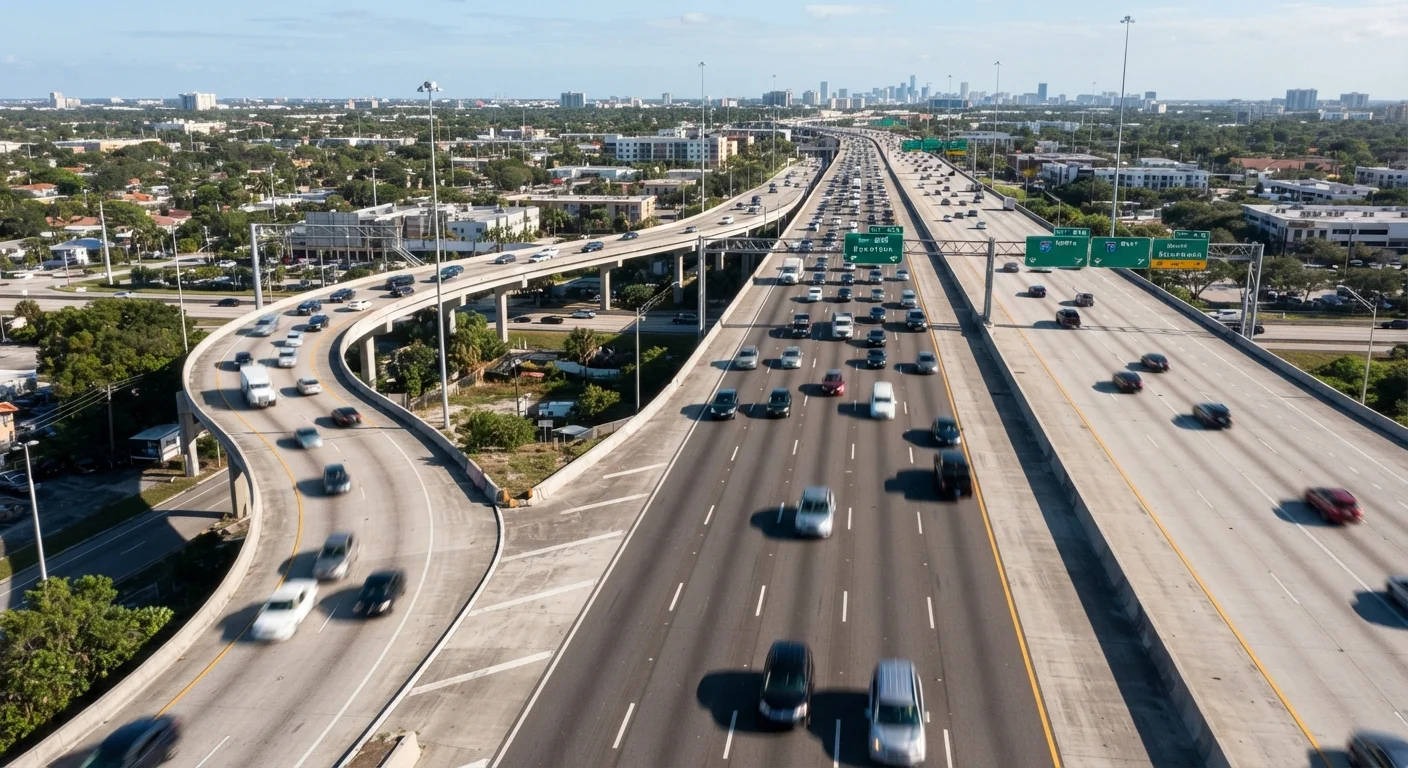
Why Highway Merging Goes Wrong So Often
Highway merging is one of the most skill-dependent moments in everyday driving - and one of the most poorly executed. Unlike city driving, where speeds are lower and reaction time is more forgiving, a misjudged merge at freeway speed can unfold in less than a second. Yet driver education rarely dedicates enough time to the specific mechanics of it.
The core problem is a mismatch between how drivers perceive the task and what the task actually demands. Many treat merging as the highway's responsibility: they arrive at the lane junction and expect traffic to accommodate them. In reality, the merging driver is the one who must adapt. Understanding right-of-way rules - including who is actually obligated to yield - is foundational to safe merging.
Highway Traffic Has the Right of Way
In every US state, drivers already traveling on the highway are not legally obligated to yield to vehicles entering from an on-ramp. The merging driver is responsible for finding a safe gap and matching speed. Assuming highway drivers will move over or slow down for you is a common - and dangerous - misconception.
The Most Common Merging Mistakes - and How to Correct Them
The errors below are not rare edge cases. They happen on US highways every day and are directly linked to congestion, rear-end collisions, and sideswipes. Recognizing them is the first step toward eliminating them from your own driving.
Entering the highway well below traffic speed, expecting other drivers to slow down or move over.
Why it happens: Many drivers treat the on-ramp like a city street and only begin accelerating once they approach the highway lanes, misjudging how much speed they need to blend safely.
Stopping or near-stopping at the end of the on-ramp because no immediate gap is visible.
Why it happens: Drivers panic when they don't spot a gap early enough, defaulting to stopping rather than adjusting their approach speed while still on the ramp.
Failing to check the blind spot before moving into the highway lane.
Why it happens: Drivers focused on the road ahead and the traffic visible in side mirrors often forget that a significant area beside and behind the vehicle is invisible without a direct shoulder check.
Merging too early or too late, forcing an abrupt lane change at the last moment.
Why it happens: Poor spatial judgment and delayed decision-making leave drivers scrambling at the exact point where the ramp ends, creating sudden, unpredictable moves that startle highway traffic.
Refusing to use the zipper merge method when a lane ends due to construction or an accident.
Why it happens: Many drivers view using a closing lane all the way to the merge point as aggressive or rude, so they move over prematurely - creating a single backed-up lane while the closing lane sits empty.
Failing to signal before merging onto the highway.
Why it happens: Some drivers believe signaling is unnecessary when the merge path seems obvious from an on-ramp, or they simply develop a habit of skipping it.
Never Stop at the End of an On-Ramp
Coming to a full stop at the bottom of a highway on-ramp is one of the most hazardous things a driver can do. Vehicles traveling at 65-70 mph cannot slow safely for a stopped car, and rear-end collisions in this scenario are frequently severe. If traffic is heavy, reduce speed gradually while scanning for a gap - but keep moving whenever possible.
The Bigger Picture: Merging as a Defensive Driving Skill
Safe merging doesn't end once you've entered the highway. It requires ongoing awareness - maintaining appropriate following distance, continuing to monitor traffic flow ahead, and staying visible to other drivers. These are all components of defensive driving, a mindset that extends well beyond speed management.
New and newer drivers often encounter merging challenges alongside other ownership learning curves. If you're still building highway confidence, reviewing common mistakes that catch new drivers off guard can help you address the broader skill gaps that come with early car ownership. The more deliberately you approach each element of highway driving, the more automatic - and safe - those habits become over time.
~300,000
Annual US lane-change and merge crashes
The Federal Highway Administration estimates that improper lane changes and merges contribute to hundreds of thousands of crashes each year on US roads.
15-40%
Traffic throughput improvement with zipper merge
Multiple state transportation departments, including Minnesota and Kansas DOT, have reported that zipper merging can improve traffic flow by 15 to 40 percent in merge zones.
The content on this site is for informational purposes only and is not a substitute for professional advice. Always consult a qualified professional for guidance specific to your situation.