

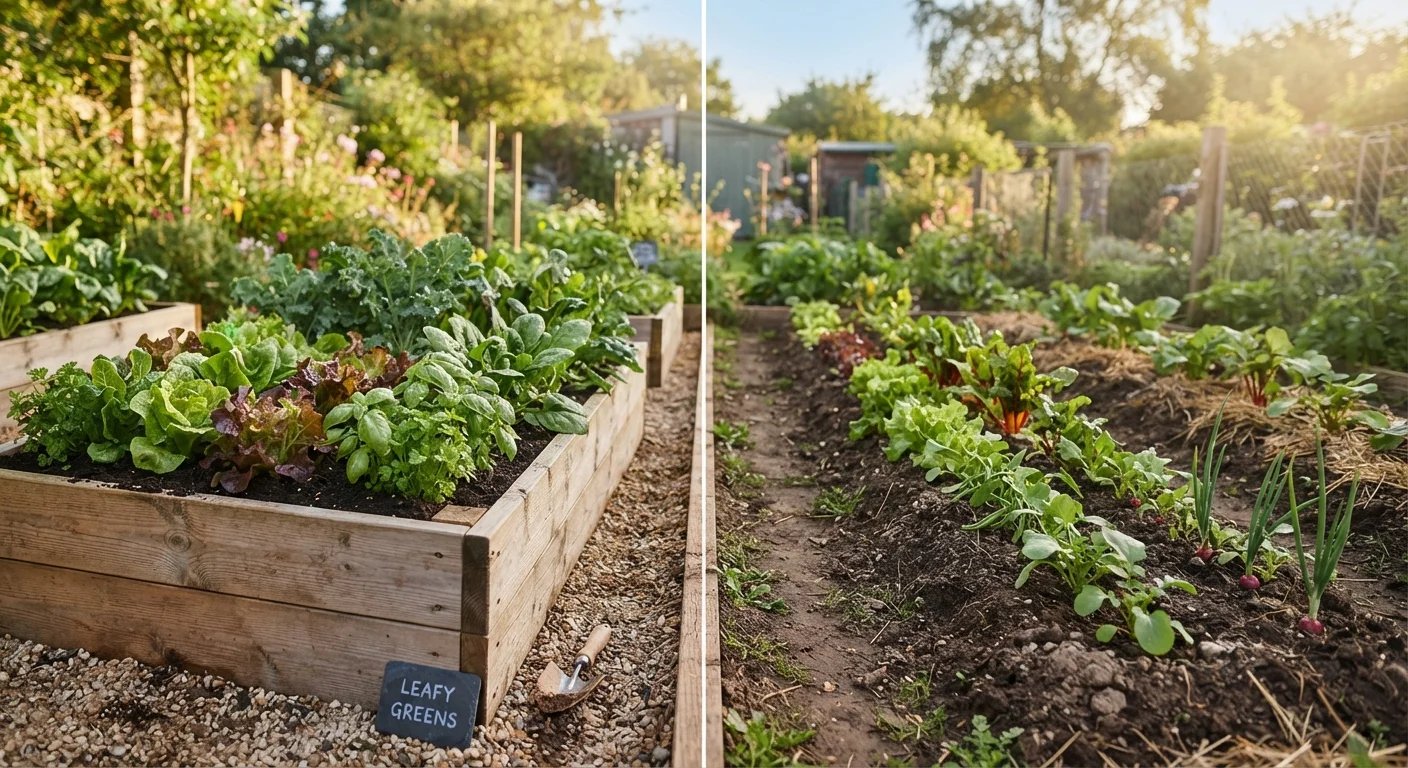
Option A
Raised Beds
The controlled, accessible growing environment.
Best for: Gardeners dealing with poor native soil, limited mobility, or who want precise control over growing conditions from the start.
Option B
In-Ground Planting
The traditional, scalable approach.
Best for: Gardeners with decent existing soil who want to grow at larger scale with lower upfront investment.
What Each Approach Actually Involves
Before weighing the tradeoffs, it helps to understand what each method means in practice. Raised beds are contained growing areas - typically framed in wood, galvanized metal, or composite material - filled entirely with soil you bring in or mix yourself. They sit above the existing ground level and are usually 6 to 12 inches deep, though some are built taller for accessibility.
In-ground planting means working directly with the native soil in your yard. You amend it, loosen it, and plant into it as-is. The ground itself is your growing medium, and the quality of what's already there shapes what you're working with.
If you're just starting out, our beginner's guide to starting a garden covers how to assess your space before committing to either method.
| Criterion | Raised Beds | In-Ground Planting |
|---|---|---|
| Upfront cost | Higher (materials + imported soil) | Lower (amend existing soil) |
| Soil quality control | Full control from the start | Depends on native soil |
| Drainage | Fast-draining, may dry out quickly | Holds moisture longer |
| Spring warm-up | Warms faster, earlier planting | Slower to warm in spring |
| Accessibility | Less bending if built tall | Requires more ground-level work |
| Scalability | Expensive to scale up | Easily expanded at low cost |
| Best crop types | Compact veggies, herbs, greens | Large, deep-rooted, spreading crops |
Soil Quality and Control
This is where raised beds hold a clear advantage for many gardeners. When you fill a raised bed, you choose exactly what goes in - typically a blend of topsoil, compost, and other amendments - giving plants an ideal start regardless of what's underneath. This matters enormously if your yard has clay-heavy, sandy, rocky, or potentially contaminated native soil.
In-ground planting requires working with what you have. That can be a genuine asset if your native soil is loamy and nutrient-rich, but in many suburban and urban yards, the topsoil has been disturbed, compacted, or stripped entirely during construction. Improving in-ground soil is absolutely achievable - regular additions of compost and organic matter work over time - but it takes patience.
Either way, a soil test before you plant gives you a clear baseline. Many university cooperative extension programs offer affordable testing kits, and the results will tell you what nutrients or amendments your soil actually needs rather than leaving you guessing. See our guide on organic vs. synthetic fertilizers for help interpreting what to add once you have results.
A Note on Contaminated Soil
If your home was built before 1978 or sits near industrial land, consider testing native soil for lead and other contaminants before planting edibles in-ground. Raised beds filled with clean, imported soil offer a straightforward way to avoid potential exposure. Your local cooperative extension office can point you toward reputable testing resources.
Drainage, Temperature, and Growing Season
Raised beds drain more freely than in-ground soil, which is a benefit in regions with heavy rainfall or clay-dense ground where waterlogging is a risk. That same good drainage also means raised beds warm up faster in early spring - sometimes several weeks ahead of native soil - which can extend your growing window on both ends of the season.
The tradeoff is that raised beds also dry out faster. In hot, dry climates or during summer heat waves, you may need to water more frequently. Understanding how your watering approach affects root depth is worth thinking through - our article on watering deeply vs. watering often explains why deep, infrequent watering tends to produce stronger root systems.
In-ground soil holds moisture longer, which can reduce watering frequency once plants are established. Deeply rooted perennials and large crops like corn or pumpkins often thrive in-ground because they can follow water and nutrients deeper into the earth than a raised frame allows.
Cost, Scale, and Long-Term Maintenance
Upfront costs differ substantially. Building a raised bed requires purchasing framing materials and enough quality soil to fill it - costs that multiply quickly if you're building multiple beds. In-ground planting generally costs much less to establish, especially if your existing soil only needs modest amendment.
Over time, both methods require ongoing attention. Raised beds need periodic topping-off as organic matter breaks down, and wooden frames eventually weather. In-ground gardens need consistent soil-building through compost additions and cover cropping to maintain structure and fertility. Our guide on composting at home is a practical starting point for anyone building soil health over time.
Scale is another practical consideration. Raised beds work beautifully for compact or neatly organized growing spaces, but filling them with imported soil becomes expensive at larger scales. In-ground planting is the natural choice when you want to grow a quarter-acre vegetable patch or an expansive native plant border.
6-12 in.
Typical raised bed depth for most vegetables
Most vegetable crops need at least 6 inches of loose, workable soil; root crops like carrots benefit from 10-12 inches or more.
2-4 weeks
Earlier spring planting possible in raised beds
Raised beds can warm faster than surrounding ground, potentially extending the growing season on both ends depending on climate.
3-5 years
Time to meaningfully improve poor in-ground soil
Regular compost additions and cover cropping can substantially rebuild degraded native soil, though meaningful improvement typically takes several seasons.
The content on this site is for informational purposes only and is not a substitute for professional advice. Always consult a qualified professional for guidance specific to your situation.