

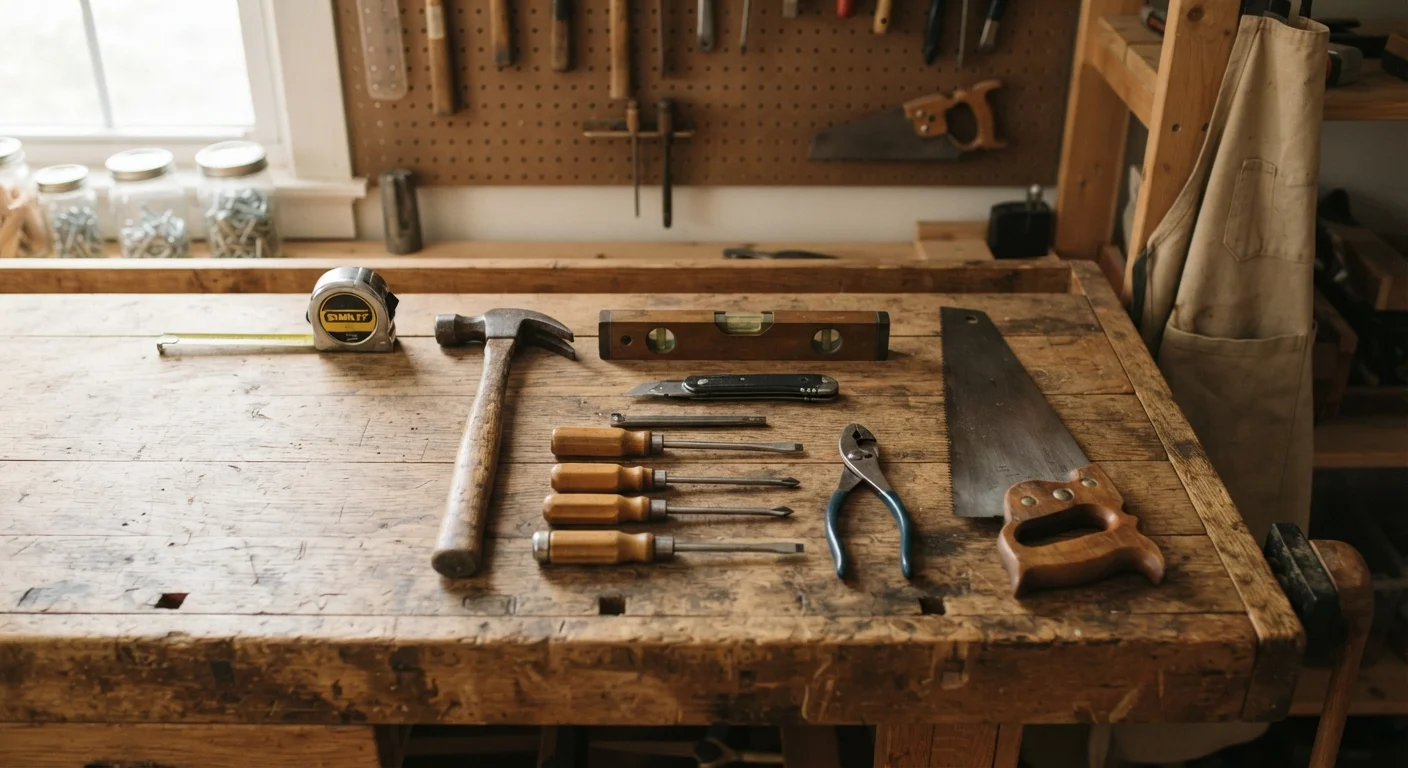
Why Knowing Your Tools Matters Before You Pick Them Up
Many first-time DIYers start a project by grabbing whatever tool looks right - and end up with stripped screws, crooked shelves, or a wall patch that doesn't hold. Understanding what each hand tool is designed to do saves time, prevents frustration, and helps you work more safely.
Hand tools don't require a power source, which makes them accessible, relatively forgiving, and ideal for most household tasks. Before you tackle anything from hanging shelves to patching trim, getting familiar with the core toolkit is the best first step. For a broader view of what to consider before any home improvement job, see our pre-project checklist.
| Minimum starter toolkit size | 8-10 essential hand tools |
| Most versatile measuring tool | 25-foot locking tape measure |
| Standard hammer weight for household use | 16 ounces |
| Most common screwdriver types needed | Flathead and Phillips (multiple sizes) |
| Recommended level length for most shelf work | 24 inches |
| Tool lifespan with proper care | Decades (hand tools are highly durable) |
The Core Hand Tools and What Each One Actually Does
Here's a practical breakdown of the hand tools most commonly needed for household DIY projects:
Tape Measure
Used to measure distances accurately before cutting, drilling, or purchasing materials. A 25-foot tape measure with a locking mechanism handles most home tasks. Always measure twice before acting.
Hammer
Drives nails and is used for light demolition. The curved claw on the back pulls nails out. A 16-ounce claw hammer is the standard choice for general household work.
Screwdrivers
Two types matter most: flathead (for slotted screws) and Phillips (for cross-shaped screw heads). Having a few sizes of each prevents stripped fasteners. A multi-bit screwdriver handles both.
Utility Knife
A retractable-blade utility knife scores drywall, cuts cardboard, trims carpet, and opens materials. Blades dull quickly - snap off worn segments or replace them before they cause you to apply excessive force.
Level
Ensures surfaces, shelves, and frames are perfectly horizontal or vertical. A 24-inch bubble level works for most jobs; a smaller torpedo level is handy in tight spaces.
Pliers
Grip, bend, and hold objects that are too awkward for hands alone. Needle-nose pliers reach into confined spaces; slip-joint pliers adjust to different widths for general gripping tasks.
Adjustable Wrench
Tightens or loosens nuts and bolts. The jaw width is adjustable, so one wrench covers many fastener sizes. Turn it so the fixed jaw faces the direction you're pulling - this reduces jaw flex and improves grip.
Handsaw
Cuts wood without electricity. A crosscut saw is best for cutting across wood grain; a hacksaw handles metal and PVC pipe. Always clamp or secure the material before sawing.
Putty Knife
Applies and smooths spackle, wood filler, or caulk. Also useful for scraping paint and removing old adhesive. Flexible blades are better for spreading; stiff blades work better for scraping.
Crosscut saw
A handsaw designed to cut wood perpendicular to the grain. Its teeth are angled to slice cleanly across wood fibers, producing a smooth edge.
Torpedo level
A short, compact bubble level typically 9 inches long. Used in tight spaces where a full-length level won't fit, such as inside cabinets or on pipe runs.
Slip-joint pliers
Adjustable pliers with a pivot point that can be shifted to two positions, allowing the jaws to grip objects of different sizes. A common general-purpose plier type.
Fastener
Any hardware used to join two materials together - including screws, nails, bolts, and nuts. Choosing the right fastener for the material is as important as the tool used to drive it.
Scoring
Making a shallow, controlled cut along a surface to guide a clean break. Commonly done with a utility knife on drywall or tile before snapping the piece apart.
Storing, Caring for, and Knowing the Limits of Hand Tools
Hand tools last for decades when stored dry and clean. Rust is the primary enemy - wipe metal surfaces with a light oil cloth if tools are stored in a garage or shed where humidity fluctuates. Keep cutting tools like utility knives and saws covered or sheathed when not in use.
Organize tools so you can find what you need quickly. A simple pegboard, toolbox, or hanging rack keeps everything visible and accessible. A well-organized home starts with organized systems - our home organization guide covers this principle in more detail.
It's also worth knowing where hand tools end and professional expertise begins. Certain tasks - particularly anything involving electrical panels, gas lines, or load-bearing structures - require licensed contractors regardless of your skill level. Our article on why DIY electrical work goes wrong explains where that line sits. The same judgment applies to vehicles - see DIY car maintenance vs. taking it to a shop for a parallel breakdown.
Finally, pair your tool knowledge with a regular maintenance habit. Many hand tool tasks - patching, caulking, tightening hardware - come up seasonally. A seasonal home maintenance calendar can help you anticipate when those jobs will arise.
When to Set Down the Tool and Call a Pro
Hand tools empower you to handle a wide range of household tasks - but some jobs require licensed professionals by law or for safety reasons. Electrical panel work, gas line repairs, structural modifications, and load-bearing changes typically require permits and qualified tradespeople. When in doubt, consulting a licensed contractor before starting is always the right call.
The content on this site is for informational purposes only and is not a substitute for professional advice. Always consult a qualified professional for guidance specific to your situation.