

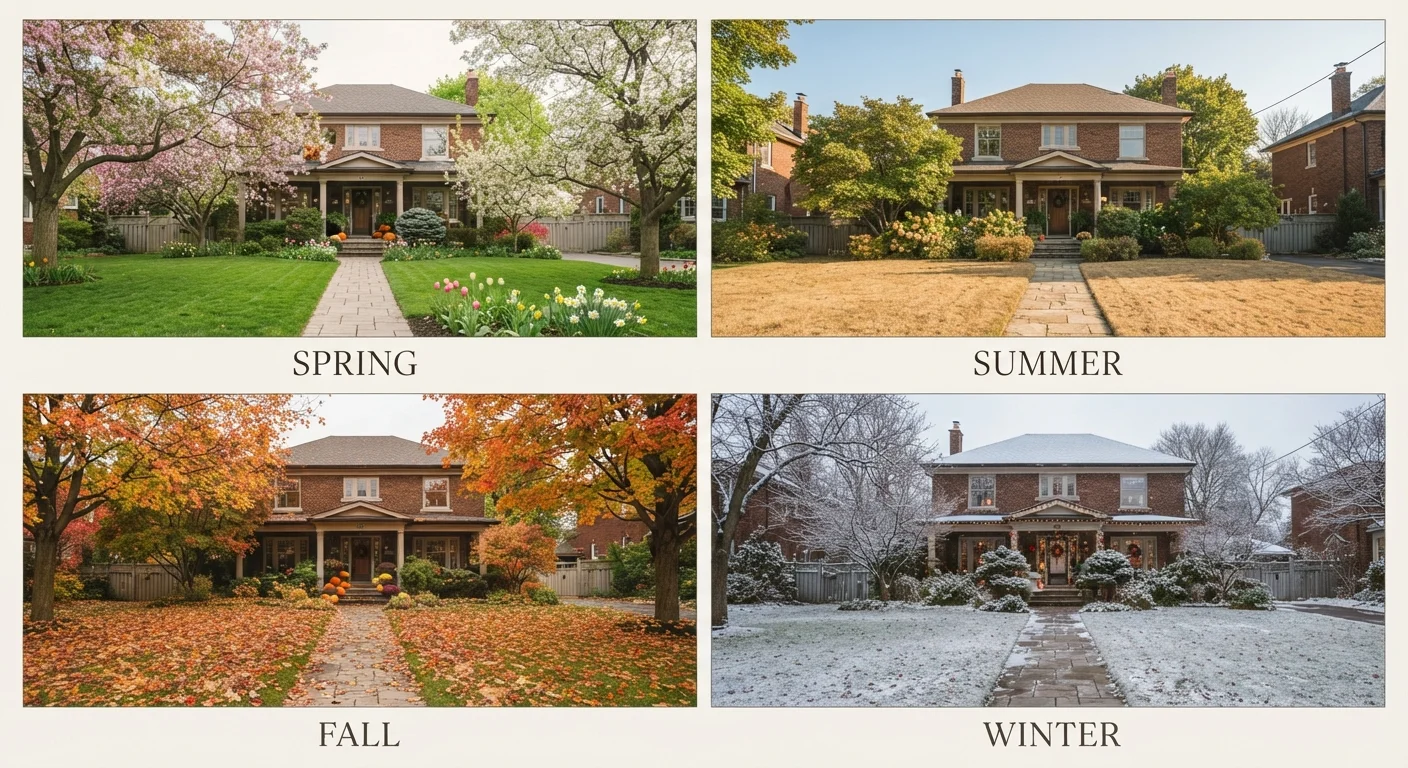
Why Seasonal Lawn Care Matters
A lawn isn't a static surface - it's a living system that responds to temperature, rainfall, soil conditions, and day length. Applying the same care routine twelve months a year leads to common problems: fertilizing at the wrong time encourages weed growth, mowing too short in heat stress kills grass roots, and aerating at the wrong moment wastes effort.
Understanding what your lawn actually needs in each season - and what it doesn't - makes the difference between a patchy, high-maintenance yard and one that stays resilient with modest effort. This guide walks through practical tasks for each season, grounded in how cool-season and warm-season grasses behave across most of the continental United States.
For a broader look at how lawn care fits into your overall property upkeep, see the seasonal home maintenance calendar covering tasks inside and out.
30-60%
Of residential water used on landscaping
According to the U.S. Environmental Protection Agency, lawn and garden irrigation accounts for nearly one-third of all residential water use nationally, much of it applied inefficiently.
1 inch
Weekly water target for most lawns
Most turfgrass types perform well with about 1 inch of water per week from rainfall or irrigation combined, according to cooperative extension guidelines.
⅓
Maximum blade height to remove per mow
The one-third rule - never cutting more than one-third of the grass blade at once - is a foundational principle recommended by turfgrass specialists to prevent stress and root damage.
Spring: Wake Up and Feed
Spring is when your lawn transitions out of dormancy, and the goal is to support that recovery without pushing growth too hard, too fast. Cool-season grasses (like Kentucky bluegrass and tall fescue) begin actively growing once soil temperatures reach around 50°F. Warm-season grasses (like Bermuda and zoysia) wake up later, once soil hits closer to 65°F.
Key Spring Tasks
- Rake and dethatch: Remove dead debris and matted thatch (a layer of organic matter between the soil and grass blades) that built up over winter. Light raking improves airflow and light penetration.
- Test your soil: A simple soil test - available through many cooperative extension offices - reveals pH and nutrient levels before you apply anything. Understanding your soil type first helps enormously. See our guide to what's actually under your lawn for context.
- Overseed bare patches: Fill thin spots with grass seed matched to your existing lawn type. Keep seeded areas consistently moist until germination.
- Apply fertilizer - carefully: If your soil test shows a need, apply a slow-release nitrogen fertilizer once soil has warmed. Avoid heavy feeding too early; it promotes top growth at the expense of roots.
- First mow: Mow once grass reaches about 3-4 inches, cutting no more than one-third of the blade height at a time.
For a full spring outdoor checklist, this spring garden prep guide covers soil, beds, and tools alongside lawn tasks.
Before spreading any fertilizer in spring, wait until you've mowed at least twice. This confirms your lawn has genuinely broken dormancy and is ready to use nutrients rather than store them as thatch.
Applying fertilizer to turf still in dormancy can encourage uneven growth and feed weeds before grass establishes, according to turfgrass extension guidance.
When overseeding in fall, aerate first and then seed immediately after - the holes created by aeration give seeds direct soil contact, which dramatically improves germination rates.
Grass seed needs consistent contact with soil to germinate well. Aeration holes act as natural seed beds, reducing the need for expensive top-dressing on most home lawns.
Summer: Protect and Conserve
Heat and drought stress are the main challenges in summer. The instinct to water more and mow frequently often backfires. The real goal is to minimize stress, not maximize growth.
Key Summer Tasks
- Raise your mower height: Taller grass (3.5-4 inches for most types) shades the soil, retains moisture, and develops deeper roots. This is one of the single most effective summer lawn moves.
- Water deeply but infrequently: Aim for about 1 inch of water per week, delivered in one or two sessions rather than daily light sprinklings. Deep watering encourages roots to grow downward, building drought tolerance.
- Avoid fertilizing cool-season grasses: Feeding cool-season lawns during peak summer heat encourages tender growth that scorches easily. Hold off until fall.
- Watch for grubs and pests: Japanese beetle larvae (grubs) feed on grass roots in mid-summer. Signs include spongy turf that lifts like carpet. Consult your local cooperative extension office for regionally appropriate treatment timing.
- Let it go semi-dormant if needed: Many cool-season grasses naturally go dormant in prolonged heat. A lawn that turns brown isn't necessarily dead - it's conserving energy. Consistent light watering (about half an inch per week) can maintain dormancy without triggering damaging growth cycles.
Avoid Overwatering in Summer Heat
Daily shallow watering encourages grass roots to stay near the surface, making turf more - not less - vulnerable to drought and heat. It also promotes fungal diseases in humid climates. If your grass wilts or shows footprints that don't spring back, that's the signal to water - not a calendar reminder.
Fall: Repair and Prepare
Fall is arguably the most important lawn care season, particularly for cool-season grasses. Temperatures moderate, rainfall often increases, and grass roots are actively growing even as top growth slows. This makes fall the ideal window for recovery and preparation.
Key Fall Tasks
- Aerate compacted soil: Core aeration - removing small plugs of soil - relieves compaction, improves water infiltration, and gives overseeding better contact with soil. Rent a core aerator or hire a lawn service for larger yards.
- Overseed the entire lawn: Fall overseeding thickens turf and crowds out weeds. Seed germinates well in warm soil with cooler air temperatures. Water consistently for the first few weeks.
- Apply fall fertilizer: A fertilizer higher in potassium (the third number on fertilizer labels) helps grass build carbohydrate reserves for winter survival. Apply after summer heat has broken.
- Keep mowing until growth stops: Don't let grass go into winter too long (where it mats and encourages disease) or too short (where it's vulnerable to frost damage). A final cut of about 2.5 inches is a reasonable target for most grass types.
- Manage fallen leaves: Thick leaf mats block light and air. Mulch them with your mower (small amounts are beneficial) or rake and compost them.
Fall lawn prep fits naturally alongside broader home winterization work. The guide to weatherproofing your home for winter covers other exterior tasks worth scheduling at the same time.
Winter: Rest and Plan
For most US homeowners, winter means the lawn is dormant - and that's exactly as it should be. The main winter lawn rule is simple: minimize traffic and disturbance on dormant turf.
Use Winter Downtime Productively
Winter is the best time to get your mower serviced, sharpen pruning tools, and sketch out any lawn changes you want to make in spring. A well-maintained mower with a sharp blade will visibly improve grass health from the first cut. Most small engine shops are less busy in winter, so scheduling is easier and often faster.
Key Winter Tasks
- Stay off frozen or dormant grass: Walking repeatedly on frozen turf damages grass crowns and creates compaction. Redirect foot traffic paths where possible.
- Avoid de-icing salts near turf: Sodium-based ice melts can damage grass and alter soil chemistry. Use them sparingly near lawn edges, or opt for sand for traction.
- Service your equipment: Winter is the right time to sharpen mower blades, change the oil, clean the deck, and inspect hand tools. Sharp blades make a measurable difference to grass health in spring.
- Plan improvements: Review where your lawn struggled last year. Research grass varieties suited to your region's climate and shade conditions. Consider whether a new garden bed or hardscape feature might reduce high-maintenance turf area.
If you're considering adding low-maintenance planting areas to reduce lawn size, low-maintenance perennials can fill borders beautifully with minimal ongoing care.
Year-Round Habits That Make a Difference
Beyond seasonal tasks, a few consistent practices underpin long-term lawn health regardless of the time of year.
- Never remove more than one-third of the blade at one mow. This single rule prevents shock, reduces water loss, and maintains root depth.
- Keep mower blades sharp. Dull blades tear grass rather than cutting it cleanly, leaving ragged edges that brown and invite disease.
- Water in the morning. Morning watering allows grass to dry during the day, reducing fungal disease risk compared to evening watering.
- Read your lawn's signals. Discoloration, thinning, or unusual patterns are clues - to drainage issues, soil compaction, shade stress, or pest activity. Identifying the cause before applying a fix saves time and money.
Lawn care doesn't exist in isolation - it's part of managing your property as a whole. The seasonal home maintenance calendar every homeowner should know is a useful companion resource for keeping the full picture in view throughout the year.
“The most common lawn mistake isn't neglect - it's doing the right things at the wrong time. Timing your inputs to match your grass's natural growth cycle is what separates a healthy lawn from a high-maintenance one.”
— Turfgrass Management Specialist, University Cooperative Extension Program
The content on this site is for informational purposes only and is not a substitute for professional advice. Always consult a qualified professional for guidance specific to your situation.