

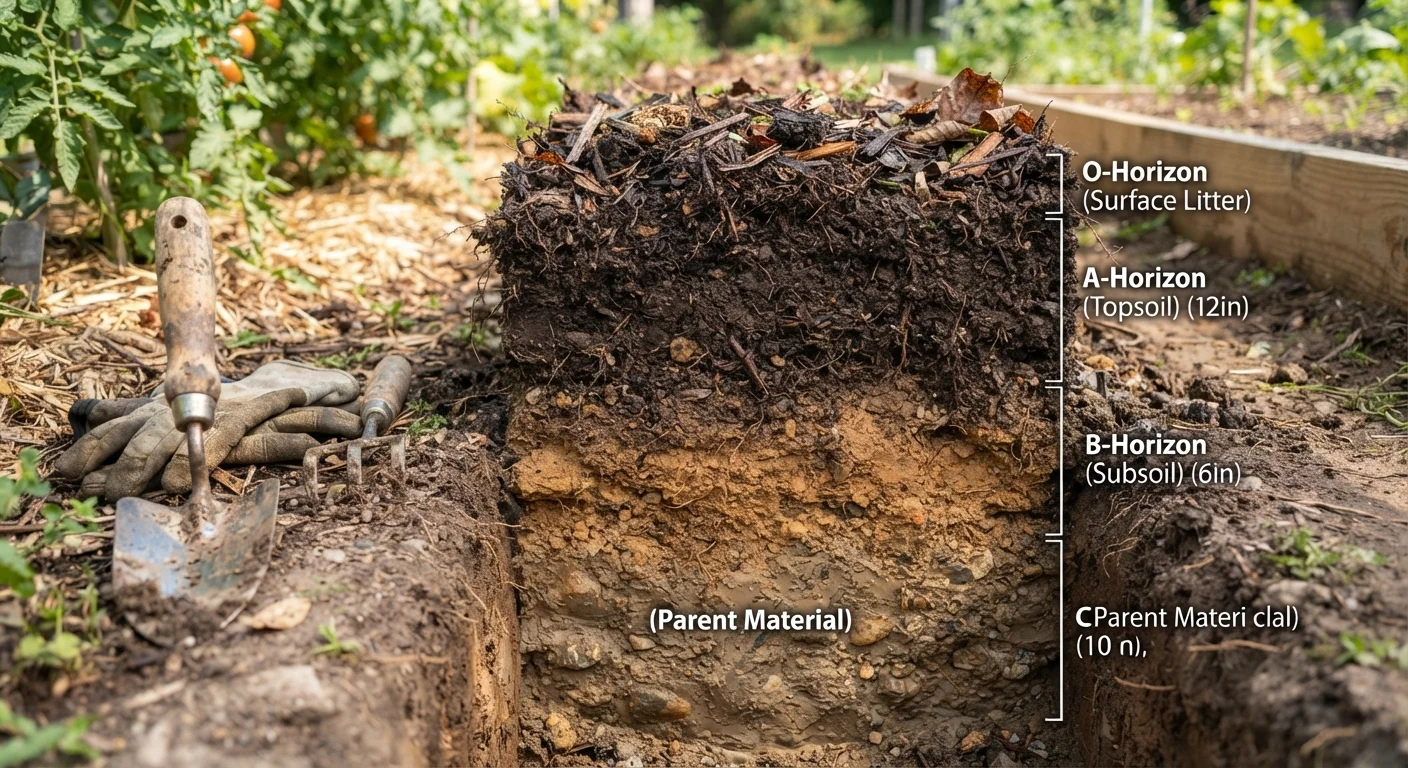
The Four Main Soil Types
Every yard sits on a unique blend of mineral particles, and the dominant particle size shapes nearly everything about how your garden grows. There are four primary soil types home gardeners encounter: sandy, clay, silt, and loam.
- Sandy soil is made up of large, coarse particles with lots of air space between them. It drains very quickly - sometimes too quickly - and warms up fast in spring. The downside is that water and nutrients move through before plant roots can absorb them.
- Clay soil contains tiny, tightly packed particles that hold water and nutrients well. It's rich but slow to drain, prone to compaction, and can become rock-hard when dry or waterlogged when wet.
- Silt soil sits between sand and clay in particle size. It feels smooth or floury when dry and is moderately fertile. Silt compacts more easily than loam but generally drains better than clay.
- Loam is a balanced mix of sand, silt, and a smaller proportion of clay. It drains well, holds enough moisture for roots, and supports good aeration - which is why it's often called the gardener's ideal.
If you're starting a garden from scratch, identifying your soil type is one of the first and most useful steps you can take.
How to Identify Your Soil at Home
You don't need a laboratory to get a useful read on your soil. Two quick tests give you solid information with materials you probably already have.
The Squeeze Test
Grab a small handful of moist soil and squeeze it firmly in your fist. When you open your hand:
- If it crumbles apart immediately - it's likely sandy.
- If it holds a tight shape and feels slick or sticky - it's likely clay-heavy.
- If it holds shape briefly then breaks apart with gentle pressure - you may have silt or loam.
The Jar Test
Fill a clear glass jar about one-third with soil, then fill the rest with water. Add a pinch of dish soap, shake vigorously, and let it sit undisturbed for 24-48 hours. The layers that settle reveal your soil's composition: sand settles to the bottom first, silt in the middle, and clay remains suspended near the top longest.
Get a Professional Soil Test
For a more precise breakdown - including pH and nutrient levels - consider sending a soil sample to your local cooperative extension service. Many offer this testing at low or no cost and provide recommendations tailored to your specific region and intended plants. Testing every two to three years gives you a reliable picture of how your soil is changing.
For a more precise breakdown - including pH and nutrient levels - consider sending a soil sample to your local cooperative extension service. Many offer this testing at low or no cost and provide tailored recommendations for your region.
What Each Soil Type Means for Your Plants
Soil texture directly shapes how plants access water, air, and nutrients. Understanding those effects helps you make smarter planting and care decisions.
~25%
Air space in healthy soil by volume
According to the USDA Natural Resources Conservation Service, well-structured soil is roughly 25% air, 25% water, 45% minerals, and 5% organic matter by volume.
2-3 inches
Compost layer recommended annually
Many cooperative extension programs recommend applying 2-3 inches of compost per year to gradually improve both sandy and clay soils over multiple growing seasons.
1,000+
Microbial species in a teaspoon of healthy soil
Soil scientists estimate that a single teaspoon of healthy garden soil contains thousands of species of bacteria, fungi, and other microorganisms that support plant nutrition.
Sandy soil is forgiving in terms of workability - it's easy to dig and doesn't compact. But it requires more frequent watering and feeding because nutrients leach out quickly. Root vegetables like carrots and parsnips actually thrive in loose sandy soils.
Clay soil can be incredibly fertile once managed correctly. Its fine particles cling to nutrients, making them available over time. The challenge is improving drainage and preventing compaction, which can restrict root growth and create standing water.
Silt soil is moderately productive and easier to work with than clay, but it can form a hard surface crust after rain. It benefits from organic matter additions to improve structure.
Loam performs well across the widest range of plants and conditions. If your lawn or garden sits on loam, you're starting from a strong foundation. If not, you can work toward loam-like conditions over time by consistently adding compost and organic material - a process described in depth in our guide to soil amendment approaches that make a real difference.
If your native soil has serious limitations, raised beds offer a practical workaround, letting you fill with a custom soil mix suited to what you want to grow.
Soil Type Varies Across Your Property
It's not uncommon for different areas of the same yard to have noticeably different soil types - especially if the land was previously graded, filled, or built upon. A vegetable bed near a downslope may have heavier, wetter clay while a raised area drains quickly like sandy soil. Testing multiple spots gives you a more complete picture.
Improving Any Soil Type Over Time
The good news: virtually every soil type responds positively to organic matter. Compost, aged manure, leaf mold, and cover crops all help break up clay, bind sandy particles, and feed the microbial life that keeps soil healthy. Consistent additions over several seasons - not a single application - are what produce lasting change.
For ongoing lawn and garden health, pairing your knowledge of soil type with seasonal care routines pays dividends. Our year-round lawn care guide explains how to time soil-related tasks like aeration and top-dressing for maximum effect. And when you're ready to feed your improved soil, understanding the difference between organic and synthetic fertilizers helps you choose the right approach for your soil's needs.
Understanding what's under your lawn isn't just a science exercise - it's the foundation for every gardening decision you make, from watering schedules to plant selection to long-term yard health.
“Healthy soil is the foundation of a productive garden. Understanding its texture and structure is the single most leveraged thing a gardener can learn.”
— USDA Natural Resources Conservation Service, Federal agency providing soil health education and research for home gardeners and farmers
Frequently Asked Questions
A simple at-home method is the jar test: add a cup of soil and water to a clear jar, shake it, and let it settle for 24-48 hours. Sand sinks first, then silt, then clay floats near the top. You can also send a sample to your local cooperative extension office for a more precise analysis.
You can't fully convert one soil type to another, but you can significantly improve its behavior. Adding organic matter like compost repeatedly over time loosens clay soil and helps sandy soil retain moisture and nutrients. This is an ongoing process rather than a one-time fix.
Clay soil isn't inherently bad - it actually holds nutrients and moisture very well. The challenge is its tendency to compact and drain slowly, which can suffocate roots. With proper amendment, clay soil can become quite productive.
Plants that tolerate drought and fast drainage tend to do well in sandy soil. These include lavender, rosemary, succulents, carrots, and many native grasses. Amending with compost will expand your options considerably.
Yes, significantly. Compacted clay lawns may drain poorly and develop thatch buildup, while sandy lawns may need more frequent watering and fertilizing. Understanding your soil type helps you tailor your lawn care routine effectively.
Loam is widely regarded as the most suitable for vegetable gardens because it drains well, retains enough moisture, and supports healthy root development. If you don't have loam naturally, raised beds filled with quality soil mix are a practical alternative.
The content on this site is for informational purposes only and is not a substitute for professional advice. Always consult a qualified professional for guidance specific to your situation.